
Cooking Gas Price: Imports Rise as FG Battles Surge
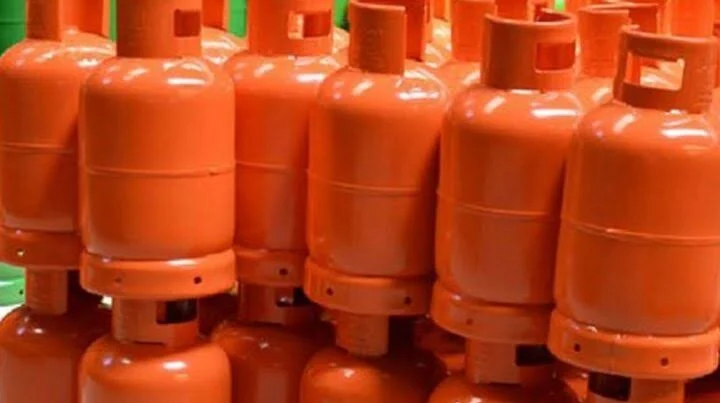

Liquefied Petroleum Gas (cooking gas) marketers imported 16,642.66 metric tonnes of LPG within the first 19 days of June as part of efforts to bridge domestic supply shortages and ease pressure on consumers facing rising prices.
The import volumes formed a significant part of the 95,769.26 metric tonnes of LPG supplied into the domestic market between June 1 and June 19, according to figures released on Monday by the Nigerian Midstream and Downstream Petroleum Regulatory Authority.
The data was presented by the Chief Executive of the NMDPRA, Rabiu Umar, during an emergency stakeholders’ meeting convened by the Minister of State for Petroleum Resources (Gas), Ekperikpe Ekpo, over the persistent rise in LPG prices across the country.
The figures showed that four imported LPG cargoes were discharged in Lagos during the review period. Algasco LPG imported 2,047 metric tonnes on June 1, while Rainoil Limited brought in 7,696.45 metric tonnes on June 15. Algasco later discharged another 3,900.63 metric tonnes on June 18 and 2,998.58 metric tonnes on June 19.
The imports came amid concerns that domestic supply has remained insufficient to meet growing demand, forcing marketers to increasingly rely on foreign sources. In recent weeks, retailers and consumers reported difficulties accessing supplies, while prices continued to rise. Nigerians also complained that the product was unavailable at some retail outlets, forcing many households to resort to charcoal and firewood for cooking.
However, the Federal Government’s intervention in the LPG market appears to be yielding results. According to the NMDPRA, average daily cooking gas supply rose to 5,040 metric tonnes in June from 4,262 metric tonnes recorded in May 2026.
“Average daily supply in June, up to June 19, is 5,040 metric tonnes per day. This is an improvement from the 4,262 metric tonnes per day recorded in May 2026. It has also improved sufficiency up to 22 days,” Umar stated.
The regulator disclosed that the country’s LPG stock position stood at 85.87 million kilogrammes as of June 21, representing 22.08 days of sufficiency. It added that supply coverage had improved from 11 days to 22 days following engagements with producers, terminal operators and marketers.
“Stakeholders’ engagements have been convened involving terminal operators, domestic producers and other suppliers. Following these engagements, supply has improved from 11 days to 22 days of sufficiency. Profiteering by marketers is being addressed,” Umar said.
Despite the improvement, the NMDPRA noted that consumers continue to pay well above its indicative pricing benchmarks. Cooking gas sells for between N1,600/kg and N2,100/kg in the South-West despite an indicative range of N1,018/kg to N1,177/kg.
In the North-Central, prices range from N1,550/kg to N1,950/kg against a benchmark of N1,066/kg to N1,224/kg, while consumers in the South-South pay between N1,400/kg and N2,000/kg compared with an official guide of N1,021/kg to N1,179/kg.
The authority attributed the disparity to “non-cost reflective pricing” by wholesalers and retailers, as well as infrastructure constraints affecting distribution.
Umar identified a domestic supply gap, inadequate distribution infrastructure, low imports and global market disruptions as key factors affecting availability and pricing.
He said, “There is a domestic supply gap created by the incomplete domestication of local production. We also have an inadequate LPG infrastructure for distribution. Low LPG imports, global supply disruptions and price volatilities arising from the US-Israel-Iran conflict in the Middle East are impacting supply and pricing.”
The regulator’s analysis showed that Nigeria consistently produced more LPG than was supplied to the domestic market between January and May 2026, with significant volumes exported as LPG or propane. While production averaged between 5,190 metric tonnes and 6,451 metric tonnes per day during the period, domestic supply lagged behind.
According to the NMDPRA, the production-supply balance represents volumes exported from the country. The data showed that Chevron exported all 148,222 metric tonnes of LPG it produced between January and May, making it the only producer with a 100 per cent LPG export rate.
The authority proposed increased imports, stricter monitoring of the supply chain and the injection of export volumes into the domestic market as immediate measures to improve affordability and availability.
Further boosting supply, the NMDPRA disclosed that an additional 44,100 metric tonnes of LPG from domestic sources had been scheduled for discharge before the end of June. It also indicated that imports would continue to supplement local supply, with Matrix LPG and Asharami Synergy expected to receive 5,000 metric tonnes each of imported LPG in Delta and Cross River states respectively.
The regulator expressed optimism that ongoing interventions and improved supply volumes would help stabilise the market and moderate prices in the coming weeks. Industry sources said cooking gas prices had already eased below N2,000/kg over the weekend and were expected to decline further as availability improves.