
French writer who used AI to write his novel wins prestigious Gouncourt Prize
By Nehru Odeh
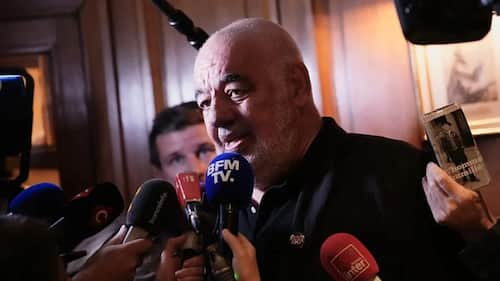
French author Philippe Jaenada has won the prestigious Prix Goncourt, France’s highest literary prize, despite admitting that he used artificial intelligence (AI) in the writing of his award-winning novel.
Jaenada, 62, won the 2026 edition of the prize on Tuesday, November 3, for his novel, L’Inconnue du quai de Javel (The Unknown Woman of the Quai de Javel), an investigative work centred on the unsolved murder of a young woman in post-war Paris.
His victory has sparked fresh debate about the place of artificial intelligence in literature, particularly as the award comes amid controversy over another writer who was disqualified from the competition over allegations of using AI-generated text.
Despite describing himself as an old-school writer who does not even own a mobile phone, Jaenada acknowledged incorporating conversations he had with ChatGPT and Claude into his book.
Defending his use of the technology, the author argued that employing AI was no different from a filmmaker using special effects.
“Would a film director hide the fact that he uses special effects?” he asked.
In an interview with French newspaper 20 Minutes, Jaenada predicted that it would soon become difficult to claim that any literary work was written entirely by a human being.
He, however, maintained that artificial intelligence could never replicate the emotional depth and personal experiences that define genuine literature.
“AI will never be human, by definition. It will never be able to write a book with its heart, its soul, its memories, its unique vision of things, people and the world,” he said.
Jaenada’s victory comes against the backdrop of the controversy surrounding Haitian-Canadian writer Thélyson Orélien, whose novel, C’était ça ou mourir (It Was Either That or Die), was withdrawn from the Prix Goncourt shortlist following allegations that it contained AI-generated prose.
Tests conducted with an AI detection tool reportedly suggested that more than 95 per cent of the book was machine-generated. However, the reliability of such detection tools remains disputed.
Orélien denied using AI to write his novel but acknowledged plagiarism in some of his earlier works.
The controversy sent shockwaves through the French literary establishment, prompting the Académie Goncourt to announce plans to amend its regulations to explicitly exclude books produced with the assistance of artificial intelligence.
The academy’s president, Philippe Claudel, said the new rules would make it clear that the prize was intended to recognize works written by human beings.
Antoine Gallimard, head of the French publishing house Gallimard, also stressed the importance of transparency in the use of AI in literary production.
He said authors who employed the technology should be honest about it.
Speaking after receiving the award at Le Drouant, the Paris restaurant where the Prix Goncourt is traditionally announced, Jaenada described the honour as the culmination of his literary career.
“For me, it’s a culmination; it’s an honour. I feel delighted,” he said.
Known for his investigative novels about unsolved crimes, Jaenada is recognised for combining extensive archival research with personal reflections and digressions.
His winning book investigates the 1949 murder of Louise Cansot, a 29-year-old woman from Brittany who moved to Paris to work as a model. Her body was discovered on the banks of the River Seine in September 1949.
In his search for the killer, Jaenada employs investigative methods reminiscent of Commissioner Jules Maigret, the fictional detective created by Belgian novelist Georges Simenon. He examines police archives and revisits locations associated with the victim’s life.
French newspaper Le Monde described the novel as deeply preoccupied with the passage of time, examining what remains and what disappears over the decades.
Jaenada secured six votes from the nine-member Académie Goncourt jury, while fellow finalist Sylvain Prudhomme received three votes for his novel, De l’autre côté du lac (On the Other Side of the Lake).
Two other books were also in contention for the award: Choses que je croyais perdues (Things I Thought Lost) by Clémentine Mélois and La solitude des professeurs est infinie (The Loneliness of Teachers Is Boundless) by Yannick Haenel.
Although the Prix Goncourt carries a symbolic cash award of just €10, it is regarded as one of the most influential literary prizes in the world and can significantly boost the commercial fortunes of its winners.
Last year’s winner, Laurent Mauvignier, reportedly sold nearly 640,000 copies of his novel, La Maison vide (The Empty House).