
Lagos targets productive economy, sustainable jobs in 2027 policy agenda
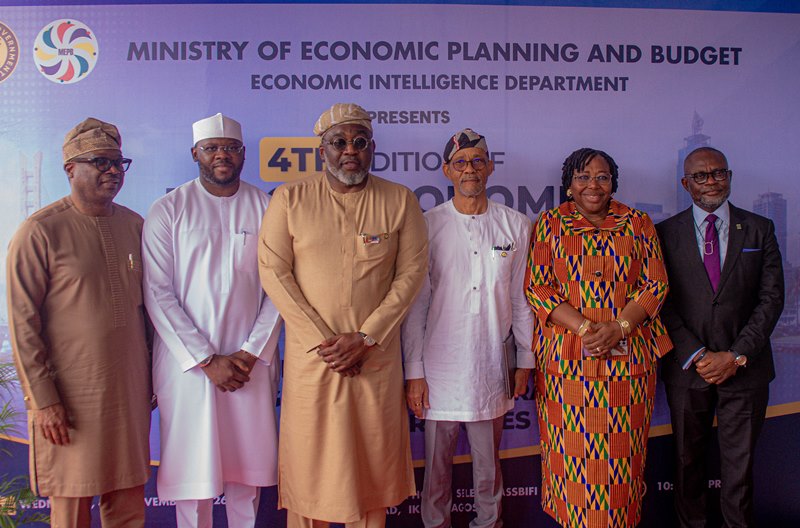
Shifting the economic focus toward productive sectors, scaling up small enterprises into formal businesses, and driving sustainable employment took centre stage at the fourth edition of the Lagos Economic Roundtable.
Held on Wednesday at the Protea Hotel in Alausa-Ikeja, key government officials and private sector leaders gathered to map out the strategic economic outlook for Lagos State heading into 2027.
Kicking off the discussions with his keynote address titled “Development Pathways, Emerging Risks and Strategic Policy Priorities,” the Lagos State Commissioner for Economic Planning and Budget, Mr. Ope George, stressed that raw economic projections must translate into actual jobs, robust businesses, and elevated living standards for residents.
Pointing to global uncertainties like geopolitical tensions, climate change, and trade disruptions, George emphasized that long-term planning remains vital under the framework of the Lagos State Development Plan 2052.
To navigate these challenges, the Commissioner outlined seven strategic priority areas to direct state policy in 2027.
These include fiscal sustainability and revenue mobilization through expenditure efficiency, tax administration, and digitalization; infrastructure development, prioritizing energy, transport, water, housing, and digital connectivity to drive competitiveness; and employment generation and human capital development focused on youth and women via vocational and industry skills.
Additional priorities cover economic diversification supporting manufacturing, agriculture, tech, tourism, and MSMEs; food security through regional partnerships, storage solutions, and resilient supply chains; climate resilience championing renewable energy, recycling, and waste recovery; and data and evidence-based governance to optimize public service delivery.
As George summarized, “Our focus goes beyond economic projections to shaping policies that will strengthen competitiveness, promote inclusive growth and secure a sustainable future for Lagos State.”
Delivering a presentation titled “Built in Lagos, Proven Globally,” Cavista Holdings Director of Strategy, Mr. Kabir Shagaya, turned the focus toward private-sector growth and the execution gap facing local enterprises. Shagaya noted that while Lagos excels at starting businesses, 2027 must be the year it proves it can scale them into sustainable formal employers.
Detailing five major obstacles—unreliable electricity, expensive capital, limited access to large buyers, skills gaps, and policy unpredictability, Shagaya proposed concrete interventions.
He urged the government to act as an anchor buyer through an umbrella marketplace for local contracts, leverage public capital to secure reliable infrastructure, and guarantee policy continuity.
As he remarked, “Lagos has proven it can start businesses. 2027 must prove it can scale them,” emphasizing that success should be measured by sustainable job creation rather than GDP growth alone.
Adding an academic perspective during a subsequent panel session, Prof. Olusegun Vincent of the Lagos Business School, Pan-Atlantic University, cautioned that the state’s heavy reliance on a fragmented, informal service and trade sector limits how deeply residents feel economic growth.
He called for a deliberate pivot toward manufacturing and industry to expand actual production capacity.
Focusing on the informal economy, Vincent urged policymakers to distinguish between basic survival-driven informal trades and what he termed “strategic informality”—larger commercial entities, such as those operating across major hubs like Alaba market, that employ dozens of workers but remain off-grid to dodge statutory duties.
“They are everywhere, in Alaba, in big markets, they are employing over 50, 60. But you never know, because they try to escape, they try to under-report because of statutory obligation,” Vincent explained.
He advocated for a nuanced framework that identifies and incentivizes these viable businesses to formalize, expanding the state’s productive tax and employment base.