
‘Training must end in jobs’: Sanwo-Olu challenges LSETF to deliver employment results
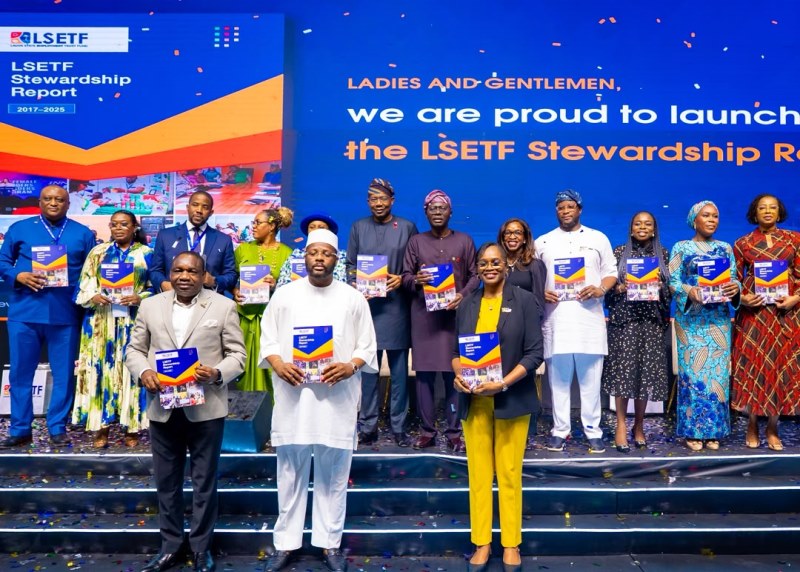
Lagos State Governor Babajide Sanwo-Olu has challenged the Lagos State Employment Trust Fund (LSETF) to demonstrate the employment impact of its training programmes by tracking beneficiaries until they secure jobs or establish businesses.
He said the state could no longer measure the success of skills development programmes by the number of people trained, insisting that the ultimate test must be how many beneficiaries find employment, become self-employed and improve their earnings.
Sanwo-Olu gave the charge on Wednesday at the fourth Lagos Employment Summit, held at the Landmark Event Centre, Victoria Island, Lagos, where he outlined priorities for the next phase of the Fund’s operations.
The governor identified the disconnect between the skills employers require and the qualifications possessed by many job seekers as one of Lagos’ most pressing employment challenges.
He said construction companies, factories and technology businesses continued to struggle to recruit adequately skilled workers, even as universities, polytechnics and secondary schools produced graduates who could not find jobs.
“Both things are true in the same city, at the same time. Closing that gap is the most important employment task in front of us,” he said.
He warned that artificial intelligence had made the need for relevant skills and continuous learning more urgent, noting that nobody could predict precisely which jobs would exist in 2036.
“But we know who will get them: people who have a real skill and who keep learning,” he said.
Sanwo-Olu said the Fund was on course to train 10,000 Lagos residents in technology, construction, fashion, healthcare and business, directing that every beneficiary should be followed until they secured employment or established a viable enterprise.
He also disclosed that 1,050 persons with disabilities had received training and start-up tools, calling for disability inclusion to become a standard feature of the Fund’s programmes, alongside greater opportunities for women and young people in underserved communities.

In a major accountability directive, the governor asked the Fund’s board to publish three performance indicators annually: the number of trained beneficiaries still in employment, the number of businesses financed by the Fund that had expanded and recruited workers, and the extent to which beneficiaries’ incomes had increased.
He said the information would enable Lagos residents to assess the actual impact of public investment in employment programmes.
The governor also urged employers to participate more actively in skills development by offering apprenticeships and internships and advising training centres on the competencies required in the workplace.
He challenged universities, polytechnics and technical colleges to involve employers in their teaching programmes and expose students to workplace experience before graduation.
Sanwo-Olu further called on the Fund to help successful small businesses access larger loans and longer repayment periods, arguing that enterprises that had demonstrated their ability to repay needed additional financing to expand and employ more people.
The summit, themed “Lagos Works: Building Africa’s Most Productive City”, with the sub-theme “A Decade of Impact. The Next Frontier of Talent”, marked the tenth anniversary of the LSETF.
Sanwo-Olu said the next decade must focus on building a workforce equipped for the changing economy and ensuring that training, access to credit and business support translate into measurable improvements in people’s livelihoods.
The Commissioner for Wealth Creation and Employment, Akinyemi Bankole Ajigbotafe, said the achievements recorded by the ministry reflected Governor Babajide Sanwo-Olu’s administration’s commitment to creating sustainable employment, strengthening businesses and improving the livelihoods of Lagos residents.
He said the ministry had pursued its mandate through strategic interventions covering job creation, entrepreneurship development, vocational and digital skills acquisition, support for micro, small and medium enterprises (MSMEs), industrial development, market access and social protection.
Ajigbotafe highlighted the Graduate Internship Placement Programme, which provides beneficiaries with employability training and practical workplace experience to bridge the gap between academic qualifications and the skills employers require.
He also identified the Lagos State Job Fair as a major employment intervention designed to connect job seekers with prospective employers. According to him, the 25th edition attracted more than 300 organisations and over 5,000 participants, while the latest edition recorded more than 4,000 participants.
On entrepreneurship development, the commissioner disclosed that the ministry had equipped 800 artisans and 400 tradesmen drawn from 60 trade associations with tools and equipment to improve their businesses and productivity.
He added that 1,425 Point-of-Sale (POS) machines were distributed in partnership with Wema Bank to strengthen small businesses’ access to digital financial services and expand their participation in the digital economy.
Ajigbotafe further revealed that the Lagos State Employment Trust Fund (LSETF) had facilitated more than ₦1.9 billion in loans to over 4,036 MSMEs, in addition to providing grants totalling ₦23.628 million to 65 businesses.
He commended Governor Sanwo-Olu for his continued support for the ministry’s programmes, noting that the administration’s commitment had helped expand opportunities for employment, entrepreneurship and wealth creation across Lagos State.