
Crawford Convocation: Igwe seeks shift from theory to practical
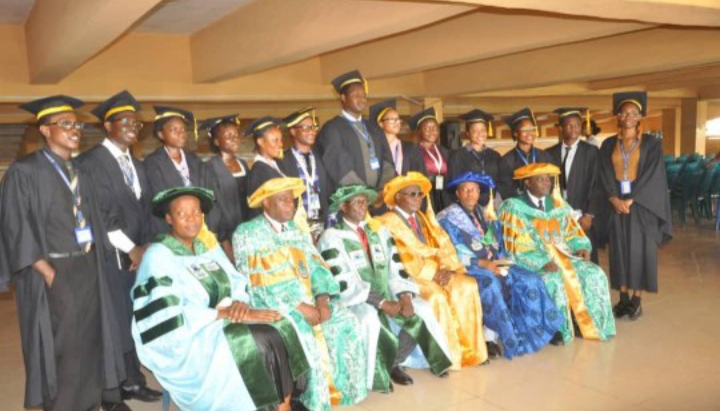
The Director-General of the Dangerous Goods Academy, Nigeria, Dr Alban Igwe, has called on Nigerian universities to adopt practical and innovation-driven approaches to education by encouraging students to develop investment-ready solutions to problems within their communities.
Igwe made the call while delivering the 18th Convocation Lecture of Crawford University, Igbesa, Ogun State, titled, “The Future of Crawford University: Globalising the Locals and Globalising the Global”.
He challenged universities to rethink their traditional academic structures, arguing that institutions should focus less on conventional theoretical research and more on producing ideas that can address real-life challenges and attract investment.
According to him, universities should serve as innovation hubs where students are encouraged to identify problems in their immediate environment, conduct research and develop practical proposals capable of being transformed into viable businesses and solutions.


He suggested that universities could support students with promising projects by providing institutional backing and serving as guarantors to help them secure the resources needed to implement their ideas.
Igwe maintained that communities should not depend on foreign institutions to solve challenges that can be addressed through local knowledge and available resources.
He cited malaria as an example, urging university researchers to investigate the factors responsible for the disease in their communities and explore indigenous medicinal resources that could contribute to finding solutions.
He also called for greater use of technology in higher education, saying digital platforms could promote international academic exchanges and expose Nigerian students to different educational experiences without the need for physical travel.
He explained that Nigerian lecturers could engage students in foreign universities through virtual platforms, just as international academics could share their expertise with students in Nigeria.
Igwe said such exchanges would broaden students’ knowledge, improve their understanding of other societies and prepare them to compete internationally.
He further identified transportation, logistics and supply-chain management as areas where Crawford University could establish a strong identity, considering its location within the Lagos-Badagry-Cotonou industrial and commercial corridor.
He proposed the establishment of a centre dedicated to trade, logistics and supply-chain studies to enable the institution to take advantage of economic activities in its surrounding communities.
The infrastructure strategist also suggested that the Lagos-Kano-Jibiya (Lakaji) Corridor could serve as a practical research environment where students from different disciplines study trade, transportation, agriculture, technology and cross-border commerce.
He said students of economics could examine the financial implications of trade routes, while those studying computer science, agriculture, business administration and law could develop solutions to challenges affecting commodity distribution, supply chains and international trade regulations.
Igwe described logistics as a major factor in determining the economic strength of nations, noting that efficient transportation systems were essential to the success of agriculture, healthcare, education, commerce and national security.
He pointed to Singapore as an example of a country that had strengthened its food security through an efficient logistics network despite having limited agricultural production capacity.
He therefore proposed the creation of a Crawford-Lakaji Knowledge Corridor that would link the university with industries, manufacturers, agricultural businesses, ports, technology companies and international markets.
Under the proposal, industries would bring their operational challenges to the university, while students and researchers would develop practical solutions that could be commercialised.
Igwe said the initiative would help transform Crawford University into a centre for research, entrepreneurship and innovation, adding that the institution’s long-term relevance would depend on its ability to turn academic knowledge into measurable economic value.
Earlier, the Vice-Chancellor of Crawford University, Prof. Solomon Makinde, urged the graduating students to uphold the values of the institution and distinguish themselves through excellence wherever they found themselves.
Makinde said the university had equipped them with academic knowledge, wisdom and godliness, expressing confidence in their ability to make meaningful contributions to society.
He described the graduating class as Unicorn 18 and encouraged its members to remain worthy ambassadors of the institution.
Similarly, the university’s proprietor and District Superintendent of the Apostolic Faith Church, West and Central Africa, Rev. Isaac Adigun, stressed the importance of combining academic excellence with strong moral values.
Adigun warned that knowledge without godliness could encourage corruption and other social vices, adding that character development should remain an important part of university education.
He explained that Crawford University had incorporated Bible studies, prayer meetings and other religious activities into its academic environment to promote discipline, integrity and responsible conduct among students.
He said the institution’s motto, “Knowledge with Godliness”, reflected its determination to produce graduates who would apply their knowledge with a strong sense of responsibility.

Meanwhile, a total of 630 students graduated at the university’s 18th convocation ceremony, comprising 528 undergraduate and 102 postgraduate students.
Among the undergraduate graduands, 54 obtained First Class Honours, 233 graduated with Second Class Upper Division, 191 earned Second Class Lower Division, while 50 finished with Third Class Honours.
The 287 graduates in the First Class and Second Class Upper categories represented approximately 54.5 per cent of the undergraduate graduating class.
The postgraduate category comprised 57 Master of Science graduates, seven Master of Business Administration recipients, 21 Postgraduate Diploma holders and 17 Doctor of Philosophy graduates.
Ibazebo Anthony Eromonsele of Computer Science and Technology and Njoku Chiamaka Jasmine of Biochemistry emerged as joint best graduating students in the regular undergraduate programme, each recording a Cumulative Grade Point Average of 4.92.
Uzoma Perpetua Ndidiamaka of Physics with Electronics was named the best graduating student in the School of Part-Time Studies after recording a CGPA of 4.0.