
2027: Fashola dares opposition to offer Nigerians better than Tinubu
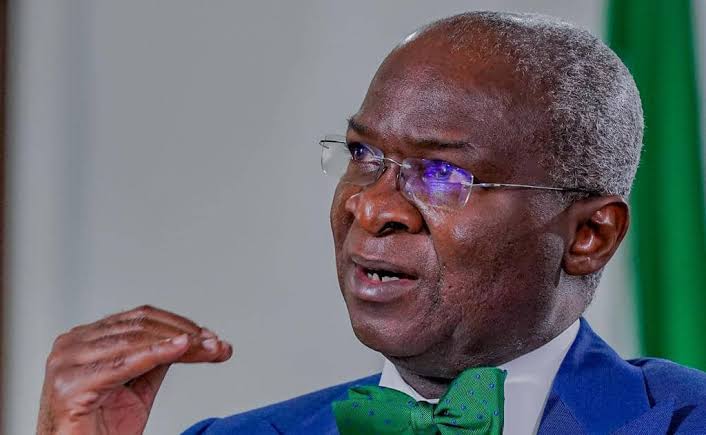
Former Lagos State Governor and ex-Minister of Works and Power, Babatunde Fashola, has challenged opposition parties to present Nigerians with a better alternative to President Bola Tinubu’s administration ahead of the 2027 presidential election.
Fashola argued that opposition parties must demonstrate what they intend to do differently and why Nigerians should abandon the economic reforms and restructuring currently being pursued by the Tinubu government.
He made the remarks during an interview with Channels Television, where he defended the President’s performance and argued that his administration deserved another term in office.
According to him, the focus of the 2027 election should be on helping Nigerians make informed choices about the country’s future rather than claims that the opposition is being weakened.
“I don’t see an attempt to decimate him. I see a legitimate contest for the opportunity to govern, if the opponents can win,” Fashola said.
He maintained that opposition parties were organising and pursuing their political ambitions, dismissing claims that they had been politically emasculated.
The former governor challenged the opposition to explain what they were offering that was different, better and compelling enough to justify interrupting the reforms already underway.
He said, “Perhaps the distinction should now shift to the other parties: what are they offering that is different, better and compelling enough to justify interrupting the process of reform, growth and restructuring already underway?”
Fashola also defended Tinubu’s political leadership, describing him as a determined leader who could, however, yield to superior reasoning and logic.
He said the President should not be underestimated, particularly when he had made up his mind to pursue a particular course of action.
On concerns surrounding the cost of living, Fashola acknowledged the economic difficulties facing Nigerians but argued that the challenges were partly connected to global developments, including the aftermath of the COVID-19 pandemic and the Russia-Ukraine war.
He explained that the pandemic disrupted economic activities and supply chains across the world, while the war further affected the supply of energy, food and other essential commodities.
According to him, Nigeria, like other countries, was not insulated from the resulting economic pressures.
Highlighting what he described as some of Tinubu’s achievements, Fashola cited the review of the national minimum wage, the establishment of the Nigerian Education Loan Fund (NELFUND) and the government’s tax reforms.
He said NELFUND was helping families cope with the financial burden of education by providing support for students’ educational expenses and monthly allowances, adding that more than one million students were benefiting from the initiative.
Fashola challenged opposition parties to explain whether they would discontinue the programme if elected.
“I challenge the opposition to say they will cancel NELFUND and see how Nigerians will react. I know they won’t dare to do it,” he said.
The former governor also pointed to the government’s tax reform laws, which he said reduced eight tax laws to four, describing the changes as significant relief for millions of Nigerians.
He disclosed that individuals earning N800,000 and below annually were exempted from personal income tax under the new arrangement.
According to figures he cited, about 8.1 million people fell within the tax-exempt category, while another 10.7 million had their tax liabilities reduced.
He added that approximately 1.6 million people would pay higher taxes because their earnings placed them within higher taxable income brackets under the progressive tax system.
Fashola argued that the tax changes would have electoral implications because millions of Nigerians were directly affected by the reforms.
“We are talking about almost 20 million people who will vote,” he said.
He further maintained that the 2023 presidential election had already demonstrated that Nigerians were willing to make their choices based on whom they trusted to manage their affairs.
Referring to the controversy surrounding the Muslim-Muslim presidential ticket, Fashola said voters had delivered their verdict in the last election, suggesting that the issue did not ultimately determine their choice.
He also described Nigeria’s democracy as maturing, noting that political parties needed to concentrate on mobilising their supporters and presenting convincing alternatives to voters.
Fashola urged opposition parties to focus on the policies and programmes they would offer Nigerians rather than merely criticising the incumbent administration.