
Author Wins Prestigious US Book Prize but Denied Visa to Attend Ceremony
By Nehru Odeh
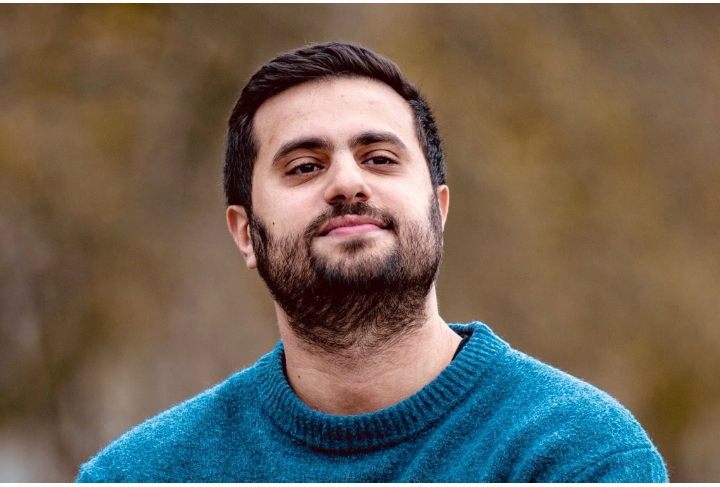
Egyptian writer and activist Abdelrahman ElGendy has won the 2026 National Book Award for Nonfiction, one of America’s most prestigious literary honours, despite being denied a United States visa to attend the award ceremony in New York.
ElGendy received the award on Wednesday, November 18, for his memoir, Huna: A Memoir of Revolution, Prison, and Becoming, but was conspicuously absent from the ceremony held at Cipriani Wall Street in Lower Manhattan.
His editor at Hogarth, Helen Thomaides, read his acceptance speech on his behalf.
The writer’s inability to attend the ceremony followed the rejection of his application for a US visitor visa. According to an account he published in The New Yorker shortly before the ceremony, his application was initially placed under administrative processing before it was eventually rejected without an explanation.
In his acceptance speech, ElGendy expressed both gratitude and sadness at being unable to share the moment with other writers, publishers and literary figures.
“If you’re listening to this, then a yearslong dream of mine has come true, and I’m not there to live it with you,” he said.
He ended his speech with a powerful appeal for freedom, declaring: “May all borders be abolished, may all prisons fall.”
ElGendy’s memoir chronicles his arrest at the age of 17 alongside his father during the mass protests that followed the 2013 military coup that ousted Egypt’s then-President, Mohamed Morsi.
He subsequently spent more than six years in prison, an experience that forms the emotional and political foundation of the book.
Huna, which explores political resistance, incarceration, survival and the difficult journey towards personal liberation, also documents the psychological consequences of living under an authoritarian government.
The writer eventually left Egypt and moved to the United States, where he pursued graduate studies and developed his literary career. However, amid concerns about immigration enforcement and the possibility of deportation to Egypt, he left the United States in April 2025 and relocated to Europe.
His visa application was an attempt to return temporarily to attend the ceremony celebrating a book that had taken years of his life to write.
In an essay published in The New Yorker ahead of the awards, ElGendy reflected on the painful irony of having his literary achievement recognised in a country he could no longer freely visit.
His victory also came amid questions about his eligibility for the award.
The National Book Foundation, which administers the National Book Awards, expanded its eligibility rules in 2024 to accommodate writers who are not American citizens, provided they maintain their primary, long-term residence in the United States.
Following questions raised about ElGendy’s residency status, the foundation defended its decision to recognise him as eligible.
According to a statement reported by Publishers Weekly, the foundation said his publisher had informed it that ElGendy was a legal and tax-paying US resident who temporarily left the country in 2025 because he feared for his safety amid immigration enforcement operations.
The foundation said it determined that the circumstances satisfied its eligibility requirements.
ElGendy’s victory was one of the major highlights of this year’s National Book Awards, which also recognised several writers whose works explore displacement, political identity, immigration, imprisonment and the human consequences of conflict.
In the fiction category, Palestinian-American writer Hannah Lillith Assadi won for her novel, Paradiso 17, a story about a Palestinian man’s life in exile and his search for belonging.
The novel, inspired partly by the experiences of Assadi’s father, explores the enduring consequences of displacement and the inheritance of historical trauma.
Other winners included Brenda Hillman, who won the poetry award for Still House in the Desert: An Eco-Contemplation; Vicente Luis Mora, whose Centroeuropa, translated from Spanish by Rahul Bery, won in the translated literature category; and David Levithan and Gabriel Duckels, who received the Young People’s Literature award for The Fight of Our Lives: AIDS in America.
Meanwhile, celebrated British-American writer Salman Rushdie received the Medal for Distinguished Contribution to American Letters, a lifetime achievement award, while paediatrician and author Dr Perri Klass received the Literarian Award for Outstanding Contribution to the American Literary Community.
The ceremony, hosted by actor Kyle MacLachlan, also featured a musical performance by Michelle Zauner, lead vocalist of the indie pop band Japanese Breakfast.
Established in 1950, the National Book Awards are among the most prestigious literary prizes in the United States. This year’s competition attracted 1,912 books across five categories.