
Fake products, real dangers: The threat to public health
By Abiemwense Moru, News Agency of Nigeria (NAN)
In Ondo State, five people recently went blind and 48 reportedly died with another 182 critically ill after consuming a toxic, locally made herbal and alcoholic drink.
As dozens of families mourn loved ones poisoned by products they trusted, the tragedy underscores the widespread danger of fake medicines, unregulated remedies, and unsafe chemicals in Nigeria’s markets.
For consumers, these risks are rarely immediately obvious.
A container may mimic a familiar herbal remedy, a pharmaceutical product may feature deceptive packaging, and agricultural chemicals can inadvertently contaminate the food supply.
Concealed within these goods may be undeclared ingredients, toxic impurities, expired substances, or prohibited chemicals capable of causing severe illness, permanent disability, or fatality.
The National Agency for Food and Drug Administration and Control (NAFDAC) has repeatedly warned that counterfeit and substandard products pose grave public-health risks, calling for greater vigilance and stronger enforcement.
NAFDAC Director-General, Prof. Mojisola Adeyeye, said the outbreak affected several communities in Odigbo Local Government Area of Ondo State, including New Town, Odole, Okele, Orita Odigbo, Araromi-Obu and Oniparaga.
Initial field reports recorded 31 deaths, comprising 20 people in Odigbo Town and 11 in Araromi-Obu. Subsequent investigations raised the reported death toll to 48.
NAFDAC also reported 182 critically ill patients. Ninety people had been admitted and discharged; six remained hospitalised, while 31 received outpatient treatment.
The consequences extended beyond immediate illness. Five people reportedly became totally blind, while two others suffered partial blindness. Affected residents experienced headaches, generalised weakness, pain, visual disturbances, breathing difficulties and altered consciousness. Some cases reportedly deteriorated rapidly.
Investigators collected samples for laboratory examinations and toxicological studies to determine the products’ composition and identify harmful substances, contaminants and undisclosed ingredients.
NAFDAC said 15 unlabeled samples underwent toxicological, microbiological and chemical screening. Acute oral toxicity tests were also conducted using laboratory mice.
Adeyeye said that all 15 samples made the test animals critically ill, and six of them caused around 50 per cent mortality, signaling significant toxicity.
Chemical screening indicated that 11 samples contained cannabis indica, while gas chromatography confirmed high concentrations of methanol, a highly toxic substance associated with blindness, organ failure and death.
Adeyeye explained that further confirmatory tests were underway to establish methanol concentrations and identify other possible toxic agents.
She warned that methanol consumption could cause severe health complications, including permanent blindness and death.
Fifteen people had reportedly been arrested over the suspected production, sale and distribution of the implicated beverages as investigations continued into how the products reached consumers.
Although the Ondo incident involved locally prepared beverages, the wider concern extends to counterfeit and substandard medicines, whose poor quality, improper storage or unauthorised ingredients can undermine treatment.
At a stakeholders’ engagement in Ogbete Market, Enugu, Adeyeye urged patent medicine dealers to obtain products only from legitimate manufacturers, importers and authorised distribution channels.
Represented by NAFDAC’s South-East Zonal Director, Dr Festus Ukadike, she warned that manufacturing, importing, distributing or selling counterfeit and substandard products constituted a serious public-health threat.
She also cautioned dealers against selling expired medicines or altering expiry dates through relabelling, describing such practices as unethical and criminal.
Adeyeye urged traders to stock only NAFDAC-registered, safe and effective products, emphasising that medicine sellers had responsibilities beyond making sales.
“Medicines were specialised products and people who deal in the sale of medicines must have high level of responsibility and accountability.’’
She said the agency was promoting Coordinated Wholesale Centre (CWC) facilities as a safer alternative to poorly regulated open drug markets, where accountability, traceability and regulatory oversight could be difficult to maintain.
“Open Drug markets shall soon be a thing of the past and the CWC is designed to enhance security, accountability and proper regulatory oversight,” Adeyeye said.
She explained that the proposed distribution framework would involve relevant institutions, including NAFDAC, the Pharmacists Council of Nigeria, the National Drug Law Enforcement Agency and the Police.
Dealers were also urged to maintain accurate records of medicines procured, stored, distributed and sold, while reporting suspected adverse drug reactions.
At the engagement, NAFDAC Assistant Chief Regulatory Officer, Dr Cletus Agu, trained medicine dealers on recognising and reporting adverse drug reactions, as well as observing good storage and distribution practices.
NAFDAC’s partnership with the Federal Neuro-Psychiatric Hospital, Kware, Sokoto State, also highlights the importance of monitoring medicines after patients begin using them.
The collaboration seeks to strengthen pharmacovigilance through improved medication monitoring, adverse drug reaction reporting and patient-safety measures.
NAFDAC State Coordinator, Alhaji Abdulsalam Lawal, described the partnership as strategic, while the hospital’s Medical Director, Dr Sulaiman Baguda, said it would strengthen drug administration and monitoring practices.
Experts say pharmacovigilance is important because some harmful reactions become apparent only after patients have started using medicines.
Reporting these events enables healthcare professionals and regulators to assess risks and improve treatment safety.
According to experts, the problem of unsafe products is not limited to medicines and beverages.
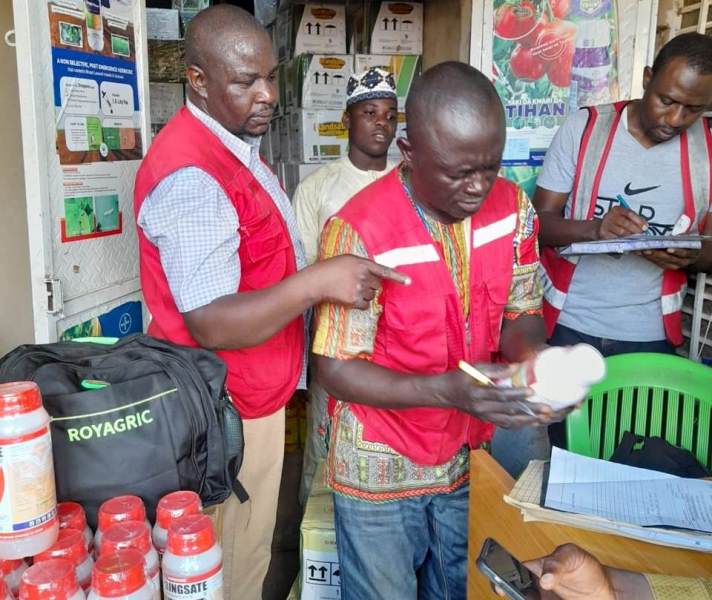
Agricultural chemicals also present serious risks when banned, falsified or unauthorised pesticides are imported, manufactured, sold or improperly applied.
NAFDAC has reported seizures of pesticides containing banned paraquat and chlorpyrifos, alongside interceptions involving paraquat and atrazine.
The agency’s enforcement activities included 120 cartons of chlorpyrifos-containing pesticides valued at more than N17 million and four cartons of banned paraquat worth approximately N148 million.
In Kebbi, officials intercepted 5,619 cartons, equivalent to 67,428 litres, and 500 cartons, equivalent to 5,000 kilogrammes, of banned paraquat and atrazine respectively.
NAFDAC also sealed four unauthorised agrochemical and pesticide manufacturing facilities in Bichi, Kano State, where officers discovered unlabeled products, bulk materials and packaging linked to illicit production.
These discoveries highlight the challenges posed by illegal importation, unauthorised local manufacturing and distribution networks.
To strengthen enforcement, NAFDAC is working with government institutions and law-enforcement agencies to identify, seize and remove illegal products from circulation and prosecute offenders where applicable.
The agency has also trained no fewer than 2,000 agro-input dealers to recognise genuine products and understand the dangers associated with counterfeit and unapproved pesticides.
Additionally, it is expanding its Investigation and Enforcement Zonal Offices from three to six to improve regulatory coverage across Nigeria’s six geopolitical zones.
Farmers have been advised to purchase pesticides only from recognised agro-input dealers, follow approved label instructions, use recommended quantities and observe stipulated waiting periods before harvesting crops.
These precautions are essential because unsafe pesticide application can expose farmers, consumers and the environment to harmful substances. Improper use may also leave dangerous residues on crops intended for consumption.
Preventing exposure to unsafe products cannot rest on regulators alone. Manufacturers, importers, wholesalers, retailers, healthcare professionals, farmers and consumers all have responsibilities in safeguarding public health.
Industry experts say manufacturers and importers must comply with regulatory requirements, while distributors and agro-input dealers should obtain products through legitimate channels and avoid banned, unregistered or falsified goods.
Consumers should check product registration details, packaging, expiry dates and sources before purchasing medicines and other regulated products. Suspicious products should be reported promptly to the appropriate authorities.
According to NAFDAC, investigations into the Ondo deaths are continuing, with reported figures subject to verification as surveillance and laboratory analyses progressed.
For stakeholders, the Ondo incident is a painful reminder that low prices and familiar packaging do not guarantee safety.
Unverified products, from toxic drinks and fake medicines to banned pesticides, put ordinary Nigerians at risk due to weak market controls.
Closing these safety gaps requires stricter enforcement, transparent labelling, proper storage, and public awareness so communities can spot hazards early.
For observers, protecting lives is a shared responsibility: using verified medicines, handling goods safely, and following pesticide laws will create safer markets and healthier communities across Nigeria.