
RecruitTech Summit urges skills-based hiring as AI changes workplace demands
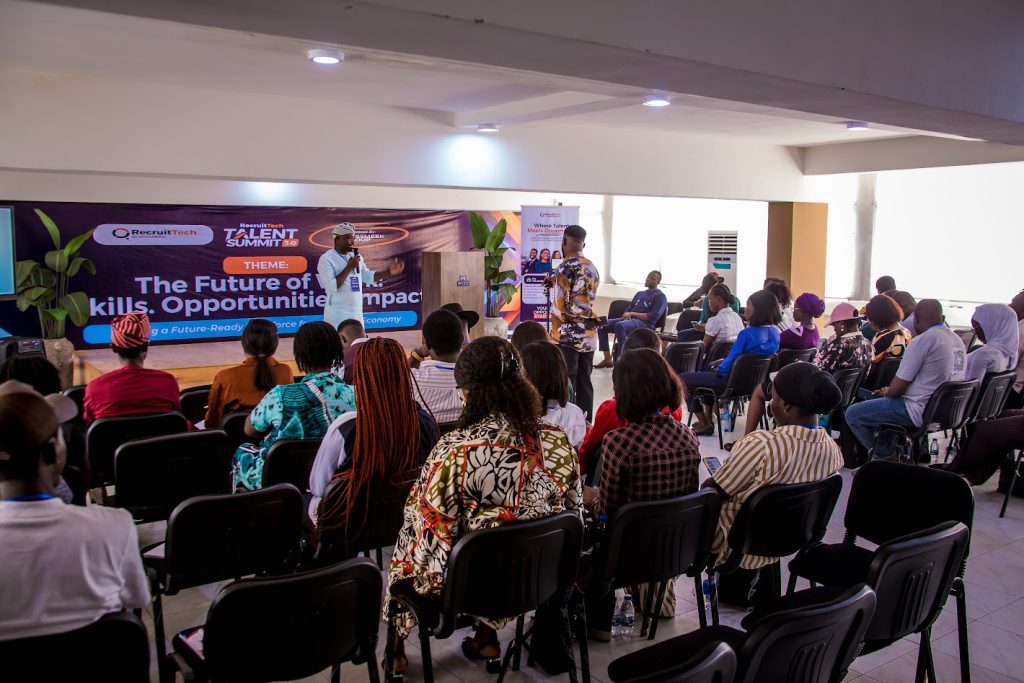
Employers and professionals should place greater weight on demonstrable skills, adaptability and the ability to apply knowledge than on academic certificates alone, according to discussions at the RecruitTech Talent Summit 3.0 held on 20 November 2026 at Miva Open University in Yaba, Lagos.
The summit, convened under the theme “The Future of Work: Skills, Opportunities, AI & Technology,” examined how artificial intelligence and digital tools are altering job requirements across sectors. Mayowa Ojo, the Workforce Development Team Lead, noted that the strongest message from the sessions was that qualifications no longer guarantee relevance.
“Employers are increasingly looking for people who can demonstrate what they know, apply their knowledge to real business problems, communicate effectively, work with others and adapt to changing responsibilities,” Mayowa Ojo, the Workforce Development Team Lead, noted. “A certificate may open the door, but competence, attitude, problem-solving ability and the capacity to deliver results are what sustain a professional in the workplace.”
He argued that employability should be assessed by what a person can do with acquired knowledge rather than by the subjects studied. On artificial intelligence, Mayowa Ojo, the Workforce Development Team Lead, said professionals should treat the technology as a means of increasing productivity while retaining independent judgement.
“AI can help you communicate better, but it should not become your identity,” he stated. “It can help you prepare for an interview, but it cannot replace your personal experiences, judgement or ability to think through a problem. Professionals must learn to use these tools intelligently, verify the information they receive and retain ownership of their decisions and ideas.”
He added that the advantage will lie with those who combine technical tools with qualities such as creativity, empathy and critical thinking. Workplace readiness, according to the discussions, extends beyond formal credentials to include communication, teamwork, accountability, time management and the capacity to translate knowledge into measurable results.
Mayowa Ojo, the Workforce Development Team Lead, noted that technology-related opportunities are appearing outside traditional technology roles, in areas such as data analysis, cybersecurity, digital operations and the application of AI within finance, marketing, human resources and other functions.
“Technology is becoming part of almost every industry,” he said. “This means that a professional in finance, marketing, human resources, healthcare, education or business operations can become more valuable by understanding how to apply technology within their field.”
He encouraged participants to identify at least one skill gap within 30 days, apply a new tool, complete a practical project and document evidence of their capabilities. Closing the broader skills gap, he said, requires shared effort. “The skills gap cannot be closed by placing the entire responsibility on graduates, just as employers cannot expect educational institutions to solve every workforce challenge,” Mayowa Ojo, the Workforce Development Team Lead, noted. “We need stronger collaboration. Employers must communicate what they need, talent must take responsibility for developing those capabilities, and workforce development organisations must help bridge the gap between both sides.”
RecruitTech, a division of Bossmeek Group focused on recruitment and workforce development, said it would continue to link the summit discussions to practical guidance and employer engagement. The extent to which organisations shift toward skills-based assessment will depend on how clearly they define requirements and how consistently candidates demonstrate applied competence.