
National Assembly approves Tinubu’s $20.5bn, €1.45bn external borrowing plan
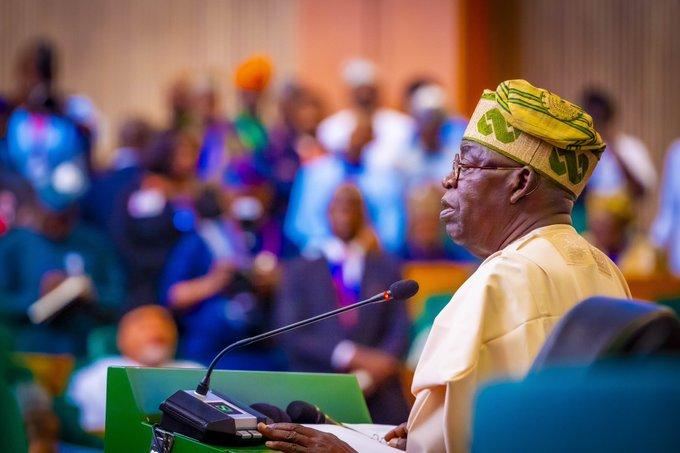
By Kazeem Ugbodaga
The National Assembly has approved President Bola Tinubu’s proposed supplementary external borrowing plan of $20.517 billion and €1.45 billion for the 2026 and 2027 fiscal years, following endorsements by both chambers of parliament.
The Senate gave its approval on Tuesday after considering the recommendations of its Committee on Local and Foreign Loans, having received the backing of the House of Representatives.
Channels Television reported that the proposed foreign borrowing was calculated using an exchange rate of ₦1,400 to the dollar.
The approval came on the same day Tinubu sought the Senate’s consideration of a revised 2026 budget, proposing a reduction of more than ₦3 trillion in previously approved government expenditure.
The President’s correspondence, titled ‘Transmission of FGN 2026 Appropriation Repeal and Re-enactment Bill and Revised 2026 Federal Government Fiscal Framework’, was presented during plenary by Senate President Godswill Akpabio and referred to the relevant committee for legislative consideration.
Under the revised fiscal framework, total expenditure is projected at ₦65.176 trillion, compared with the earlier approved budget of ₦68.323 trillion.
The Federal Government’s projected revenue, including receipts from government-owned enterprises, stands at ₦33.720 trillion, while capital expenditure is estimated at ₦26.232 trillion.
Despite the proposed reduction in spending, the fiscal deficit remains unchanged at ₦31.457 trillion, representing 5.64 per cent of Nigeria’s Gross Domestic Product.
The proposed total borrowing requirement also remains at ₦29.218 trillion, comprising ₦18.428 trillion in domestic borrowing and ₦10.790 trillion in external borrowing.
Tinubu explained that the $7.7 billion external loan, estimated at ₦10.368 trillion, would finance an existing provision for foreign borrowing in the budget rather than increase the overall borrowing limit.
He said the adjustments were intended to prioritise existing government commitments, improve capital budget implementation, strengthen the credibility of the budget and maintain fiscal discipline.
The proposed borrowing plan has generated debate over Nigeria’s rising debt obligations and the government’s capacity to translate borrowed funds into completed projects and economic benefits.
The development comes as the Federal Government prepares to present its 2027 budget to the National Assembly before the end of December.