
TMS registers 61,093 members in seven weeks, covers 730 LGAs – Inuwa
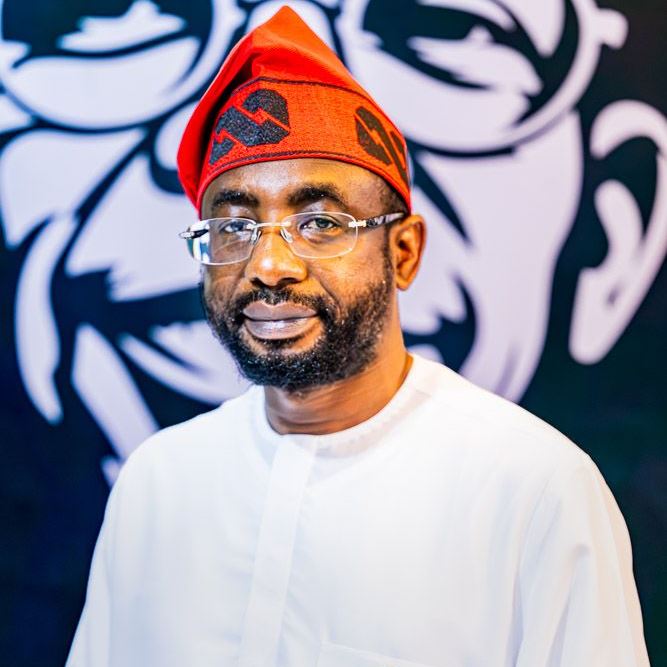
Mallam Kashifu Inuwa Abdullahi is the Founder, Chairman of the Board of Trustees and National Coordinator of the Tinubu Movement for Sustainable Governance Foundation (TMS). In this interview, he speaks on President Bola Ahmed Tinubu’s reforms, the 2027 general election and other issues.
What does today mean for TMS?
Today marks an important milestone in the history of our young organisation. On October 1, 2026, we launched TMS as an independent political support movement. Just seven weeks later, we have gathered to establish a permanent institutional home.
Today, we are not merely opening an office; we are opening a new chapter in our responsibility to Nigeria. This building must become more than a collection of offices. It must serve as a centre for ideas, research, civic engagement and youth empowerment, as well as a place for documenting the policies, decisions and institutions that shape our nation’s development.
Why does TMS exist?
We began with the conviction that Nigeria’s future deserves serious discussions about economic transformation, public policy and sustainable governance.
Nigeria is a nation of extraordinary possibilities, but our development journey has been marked by persistent structural challenges. We have struggled with inadequate infrastructure, low productivity, economic uncertainty, insufficient employment opportunities and the difficulty of sustaining development policies across political transitions.
How do you view the reforms under President Bola Ahmed Tinubu?
Since assuming office in May 2023, President Bola Ahmed Tinubu has initiated significant economic and institutional reforms under the Renewed Hope Agenda. These include changes to petrol subsidies, the foreign exchange system, fiscal policy and investment conditions, alongside initiatives in infrastructure, education, healthcare and digital transformation.
These decisions have generated considerable public debate. Some Nigerians see them as necessary steps towards addressing long-standing economic distortions, while others question their implementation, distributional consequences and the hardship experienced by households. These perspectives deserve serious examination.
At TMS, we believe public policy should be understood through facts, evidence and its consequences for citizens. We must distinguish between policies announced, reforms implemented and results achieved. Reform is not an end in itself; its purpose is to improve people’s lives.
The ultimate measure of economic transformation must be whether families experience better living standards, young people gain access to productive work, businesses become more competitive and public institutions deliver reliable services. That is the standard by which sustainable governance should be assessed.
Is TMS only about the 2027 election?
Our ambition has grown beyond responding to the political debates of the moment. We want to build an institution whose relevance will extend beyond the 2027 general election.
We envision an institution that encourages citizens to understand public policy, supports grassroots economic participation, preserves historical records for future generations and contributes to a culture of responsible, evidence-based democratic engagement.
TMS is independently established. We have our own leadership, governance structures, membership system and organisational responsibilities. Our political position is publicly known, but our commitment to factual documentation, peaceful participation and institutional accountability must remain equally clear.
How large is TMS now?
In just seven weeks since our founding, TMS has made significant progress in establishing its national organisational structure and developing a digital membership platform.
According to our latest membership records, TMS has 61,093 validated members, with representation across all 36 states of the federation and the Federal Capital Territory.
Our membership database shows geographic representation in 730 of Nigeria’s 774 local government areas, representing approximately 94 per cent coverage. It also records membership across 4,750 wards and 22,584 polling units nationwide.
What is the composition of the membership?
The most remarkable feature of our membership is its youthful composition. Our data shows that 65 per cent of TMS members are between the ages of 18 and 34. That represents approximately 40,000 young Nigerians within a movement of just over 61,000 registered members.
Our membership also reflects the participation of both men and women, with 65 per cent male and 35 per cent female representation. We recognise the importance of expanding opportunities for women’s participation and leadership as our institution develops.
Regarding civic participation, our membership records indicate that 81 per cent of respondents report already possessing their Permanent Voter Cards, while 11 per cent are yet to collect theirs and six per cent are not registered to vote. The remaining two per cent requires reconciliation with our records.
What does that youth figure mean for TMS?
This is not merely a demographic statistic; it places a profound responsibility on our institution. It means young people must be central to our organisational priorities, leadership development, policy discussions and community programmes.
Young Nigerians do not simply need opportunities to participate in national conversations. They need opportunities to participate meaningfully in the national economy. They need access to quality education, employable skills, practical experience, technology, finance and markets. Above all, they need pathways through which their talents, creativity and entrepreneurial ambitions can translate into decent jobs, sustainable businesses and dignified livelihoods.
This is why youth employability and entrepreneurship will be central to TMS’s grassroots development agenda.
What programmes will TMS run from this secretariat?
We intend to develop two complementary programmes.
First, grassroots policy dialogue. Many public policies are discussed in technical language that ordinary citizens may find difficult to understand. We want to make these discussions more accessible. Our grassroots dialogue sessions will examine why particular reforms were introduced, what they were intended to achieve, what evidence exists of their implementation and what concerns citizens continue to experience. We will encourage questions, constructive criticism and the examination of alternative policy approaches.
Second, youth entrepreneurship and economic opportunity. Our planned entrepreneurship workshops will focus on practical business development, digital skills, innovation, market access and sustainable enterprise. We want these programmes to complement existing initiatives and respond to real community needs.
During our first 90 days, we will assess our organisational capacity, develop programme standards and establish realistic delivery targets. We will publish measurable commitments once that assessment is complete. We must not confuse ambitious announcements with actual delivery.
You spoke about preserving reform history. What do you mean?
Nations do not develop through policies alone; they also develop through the lessons they preserve. When we fail to document how public policies were conceived, implemented, evaluated and improved, future generations lose valuable opportunities to learn from history.
One of our long-term aspirations is to create a comprehensive historical record of the public policies and governance decisions associated with President Bola Ahmed Tinubu. We envisage beginning with his tenure as Governor of Lagos State from 1999 to 2007. We would then examine how relevant policies evolved under successive administrations, alongside his subsequent national political career and presidency, which began in 2023.
As part of this longer-term vision, TMS will explore the development of a National Reform Documentation and Impact Observatory and a publicly accessible digital policy archive. We also envisage the possibility of a future PBAT Presidential Library.
These are aspirations, not institutions we are commissioning today. They will require feasibility studies, appropriate governance, sustainable funding and professional archival standards. Our objective should be to preserve an accurate historical record, including achievements, implementation difficulties, independent criticism and lessons learned. History serves future generations when it preserves evidence, not merely admiration.
What is your position on political violence ahead of 2027?
As Nigeria approaches the 2027 general election, political competition will naturally intensify. We must remember that democracy gives citizens the right to support different candidates, question government decisions and advocate alternative policies. Political differences must never become a justification for violence.
We are concerned by reports of intimidation, attacks on political gatherings and inflammatory public rhetoric. TMS condemns political thuggery and violence, regardless of who is responsible. We call on security agencies to investigate reported incidents impartially and ensure accountability through due process.
No political ambition is worth the life of an innocent Nigerian. Our members must conduct themselves responsibly, respect the rights of others and reject intimidation and misinformation.
What personal commitments are you making?
First, transparency. We will work to establish clear organisational processes and accountable leadership structures.
Second, responsible stewardship. Resources and contributions entrusted to TMS must be managed responsibly and directed towards our stated objectives.
Third, factual documentation. We will distinguish evidence from opinion, verify public claims and correct mistakes when they are identified.
Fourth, peaceful democratic engagement. We will respect differing opinions and reject political violence, intimidation and misinformation.
These commitments must guide the work of our National Secretariat. I also invite the media, our members and the Nigerian public to hold us accountable for them.
How will you measure success?
Our membership statistics are encouraging, but registration figures alone do not define institutional success. They do not automatically translate into functioning grassroots structures or measurable development outcomes.
Our responsibility is to convert organisational reach into meaningful public value. We must move from membership registration to meaningful participation, from participation to capability, from capability to opportunity, and from opportunity to sustainable prosperity.
For TMS, the ultimate measure of success will not simply be how many young Nigerians join our movement, but how effectively our institution contributes to expanding their knowledge, capabilities and opportunities.
Today, we are commissioning a building, but our real task is to build an institution. A building can be completed with bricks, cement and steel. An institution must be built with integrity, competence, discipline, trust and a commitment to service.
Our guiding philosophy remains: Continuity of Policies. Stability of Institutions. Sustainability of Development.