
ACOMIN tasks govt, other stakeholders on sustainability of community health projects
…Calls for increased local funding as Global Fund support winds down
By Adejoke Adeleye Ogun
Civil Society in Malaria Control, Immunisation and Nutrition (ACOMIN) has called on federal and state governments, local government authorities, the private sector, philanthropists and other stakeholders to sustain the achievements recorded through Community-Led Monitoring (CLM) beyond donor funding.
The organisation made the call ahead of the close-out of the Global Fund Grant Cycle 7 (GC7), stressing the need for increased domestic investment, stronger community participation and government ownership to prevent the gains recorded in healthcare delivery from being reversed.
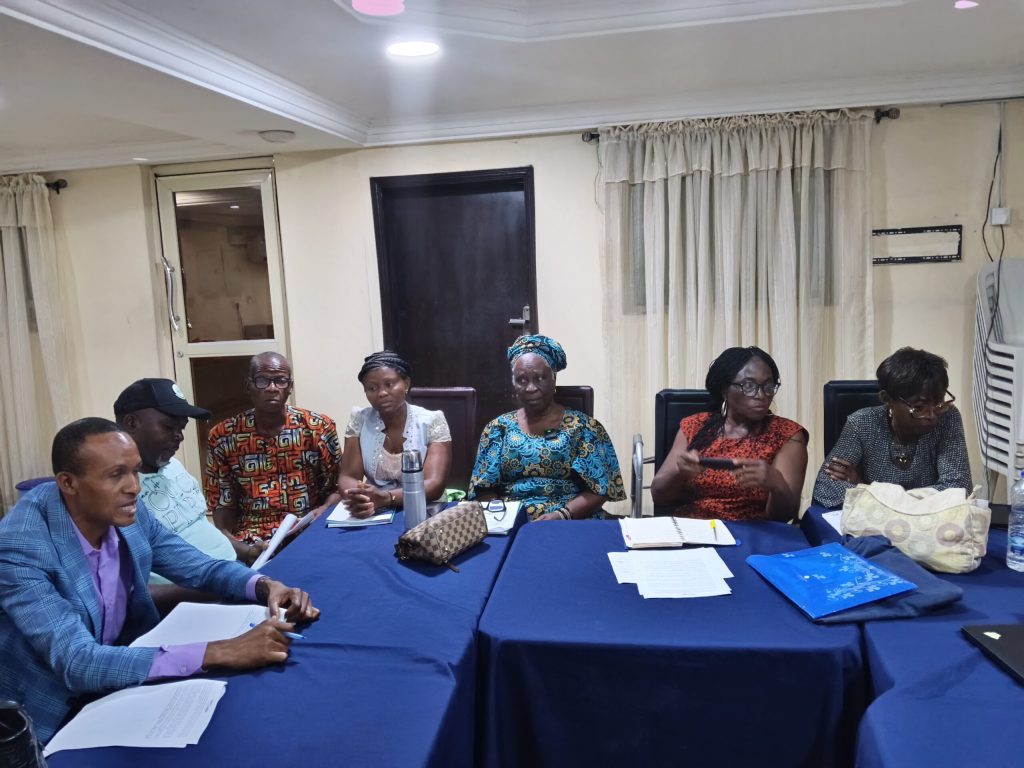
Speaking at a media meeting in Abeokuta, the capital of Ogun State, on the theme, “Sustaining Community-Led Monitoring Achievements Beyond Donor Funding,” the state Program officer Mrs Chika Obioma emphasised that community-led monitoring had played a significant role in identifying gaps in healthcare delivery and mobilising support to address them, particularly in underserved and vulnerable communities.
She said the Community-Led Monitoring empowers residents to assess healthcare services, identify challenges and engage relevant authorities on solutions across HIV/AIDS, Tuberculosis and Malaria (ATM) interventions.
According to her, the initiative has contributed to improved access to healthcare, quality service delivery, accountability and better patient experiences through interventions targeting infrastructure, potable water, electricity, medical equipment, essential supplies and staffing shortages.
Obioma also disclosed that CLM interventions contributed approximately N1.7 billion to domestic resource mobilisation across 13 states between 2019 and 2022.
It added that contributions between 2023 and 2025 across 25 states and the Federal Capital Territory stood at N657,864,950, while interventions across 13 states in 2026 accounted for another N379,245,034.83.
In Ogun State, the initiative has facilitated several community-driven interventions aimed at improving healthcare infrastructure and service delivery in primary healthcare centres.
Among the achievements recorded was the intervention of the Food Conservation and Waste Elimination Initiative (FOODCOWA), which facilitated the replacement of worn-out mattresses and installation of a new door net at Enugada Primary Healthcare Centre, as well as the donation of two solar lights to Ikeye Health Centre, Abeokuta North Local Government Area.
Similarly, the state Coordinator Mrs Funmilayo Olatunji said the Gender Development Initiative (GenDI) facilitated the plastering, repainting and beautification of the dilapidated Egan Primary Healthcare Centre in Sango Ward, Ado-Odo/Ota Local Government Area, alongside the donation of a weighing scale to support patient assessment.
The organisation also facilitated the provision of a signpost to improve the visibility of Iloye Primary Healthcare Centre, while interventions at Ifelagba PHC, Ijoko Ward, Ado-Odo/Ota LGA, included the renovation of the facility and repairs to damaged drip stands.
Other interventions included the provision of benches at Ofada Health Centre in Obafemi Owode Local Government Area through the Courageous People Health and Development Initiative.
The Centre for Economic Empowerment and Gender Activities (CEFGA) also facilitated the donation of a blood pressure monitoring machine, three plastic chairs and a gas stove to Ewu-Oliwo Health Centre in Sagamu Local Government Area.
At Ijaale Ketu Health Centre, Ijoun Ward, Yewa North Local Government Area, the Afon Hope Foundation facilitated the donation of a weighing scale and other essential equipment.
ACOMIN maintained that the interventions demonstrated the capacity of community-led monitoring to identify service-delivery gaps, mobilise local resources and strengthen accountability within the healthcare system.
However, it warned that sustaining the achievements would require a deliberate transition from donor-dependent interventions to government ownership, increased domestic financing and continuous community engagement.
The organisation therefore urged state and local governments to integrate CLM findings into their health policies, plans and budgets, while making adequate provisions for the rehabilitation of healthcare facilities, essential medicines, medical equipment, clean water, electricity and the recruitment or deployment of qualified health personnel.
It also called for effective mechanisms through which government agencies could respond promptly to challenges identified by communities, assign responsibilities, set timelines for interventions and provide feedback on actions taken.
On the role of communities, ACOMIN urged traditional and religious leaders, civil society organisations and community-based groups to sustain monitoring activities, document healthcare challenges and engage relevant authorities to ensure that identified gaps were addressed.
It encouraged communities to strengthen monitoring groups, participate in facility health committees and Ward Development Committees, and collaborate with philanthropists and the private sector to complement government efforts.
The organisation, however, stressed that community contributions should not absolve government of its primary responsibility to adequately finance and provide quality healthcare services.
ACOMIN reaffirmed its commitment to facilitating community engagement, strengthening stakeholder collaboration, promoting domestic resource mobilisation and protecting the gains recorded through the Global Fund-supported integrated Community-Led Monitoring project.
It stressed that the sustainability of the initiative would depend on collective responsibility, adequate local financing and the willingness of stakeholders to translate community evidence into lasting improvements in healthcare delivery.