
Are Weight-Loss Injections Better Than Prescription Pills?
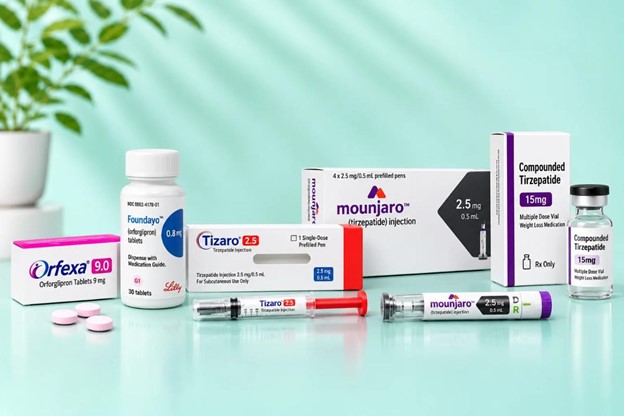
The growing use of prescription medicines for obesity is bringing renewed attention to a question facing patients and healthcare professionals: are weight-loss injections more effective than pills?
Injectable medicines such as Mounjaro, Tizaro, Ozempic and Wegovy have gained prominence following clinical trials showing significant weight loss in some patients. Now, newer oral treatments are expanding the options available for medical weight management.
The development is moving the conversation beyond injections, with researchers examining how oral medicines compare in effectiveness, safety and ease of use.
For patients considering treatment, the choice depends on the specific medication, its approved use and how well it fits a person’s health needs.
How prescription weight-loss medicines work
Prescription weight-loss medicines target some of the biological processes that regulate body weight. Depending on the drug, they may suppress appetite, increase feelings of fullness, influence blood sugar regulation or slow the movement of food through the stomach.
Several newer treatments act on hormones involved in appetite and metabolism. Medicines such as semaglutide and tirzepatide act on hormone pathways that help regulate hunger and food intake. Other prescription medicines, including phentermine, work through the central nervous system to reduce appetite.
Ann Mbene, founder of HueBeautyGlam, says some medicines now used in weight management were initially developed to treat obesity and related health conditions. She says the clinic has seen clients using treatments such as Tizaro and Mounjaro lose between 3.4kg and 26kg over periods ranging from three weeks to four months.
“Some of these medications were originally developed to help manage obesity and related health conditions, but at HueBeautyGlam we’ve prescribed these medications for people to use them as part of their weight-loss journey,” Mbene says.
“However, one thing I always emphasise during consultations and assessments is that these medications are not magic pills. They do not guarantee weight loss, and your eating habits still matter. We often develop meal plans for our clients because medication should be supported by healthier food choices and regular exercises.”
Mbene recalls a client taking Mounjaro who had been making progress with treatment. During one week, the client ate more cakes than usual and did not record any weight loss, despite taking her scheduled injection.
“For both of us, it was proof that taking the medication is only one part of the process. What you eat and the habits you build also play a role in your results,” she says.
Weight-loss medicines are generally prescribed alongside dietary changes, physical activity and ongoing clinical support. Treatment is not one-size-fits-all, and the choice of medication depends on each patient’s health and individual needs.
Mbene says that during consultations at HueBeautyGlam, she assesses clients’ BMI, weight-related health conditions, medical history, current medications and previous response to treatment before recommending a weight-management plan.
As prescription treatments become more widely used, healthcare professionals continue to emphasise the importance of medical supervision and realistic expectations. While these medicines can support weight management, they do not guarantee results or replace the lifestyle changes that form part of a broader treatment plan.
Prescription weight-loss injections: how they work and what results show
Prescription weight-loss injections include medicines such as Mounjaro, Tizaro, Ozempic and Wegovy.

Several belong to a class of medicines that act on hormones involved in appetite and blood sugar regulation.
1. Semaglutide injections
Semaglutide, the active ingredient in Ozempic and Wegovy, is a GLP-1 receptor agonist. It mimics the action of the GLP-1 hormone, which helps regulate blood sugar, appetite and food intake.
Ozempic is primarily approved for the treatment of type 2 diabetes, while Wegovy is specifically approved for chronic weight management in eligible patients in certain markets. Although both contain semaglutide, their approved uses, doses and product instructions differ.
2. Tirzepatide injections
Tirzepatide, the active ingredient in Mounjaro and Tizaro, acts on both GIP and GLP-1 receptors. These hormone pathways are involved in appetite regulation and glucose metabolism.
By activating these receptors, tirzepatide can help reduce food intake and increase feelings of fullness. The medicine is generally administered once a week, with the dose gradually increased under a prescriber’s guidance.
Clinical trials have shown substantial average weight loss with tirzepatide. In the SURMOUNT-1 trial, participants taking tirzepatide lost an average of approximately 15% to 21% of their body weight over 72 weeks, depending on the dose.
Weight-loss results with injections in Nigeria
At HueBeautyGlam, a weight-loss clinic in Lagos, Nigeria, founder Ann Mbene says clients using injectable treatments such as Tizaro and Mounjaro have reported losing between 3.4kg and 26kg over periods ranging from three weeks to four months.
The results reflect individual client experiences at the clinic, rather than outcomes that every person using the medication should expect.
Mbene says consultations at HueBeautyGlam include advice on dietary changes and, where appropriate, meal plans to support clients during treatment.
“Weight loss medications are not magic pills. They do not guarantee weight loss, and your eating habits still matter. We often develop meal plans for our clients because medication should be supported by healthier food choices and regular exercise,” she says.
Mbene recalls a client taking Mounjaro who recorded no weight loss during one week, despite taking her scheduled injection. The client had eaten more cakes than usual that week.
The experience, Mbene says, reinforced the importance of looking beyond medication alone when supporting people through weight loss.
However, a single week without weight loss does not establish that a particular food caused the result. Body weight can fluctuate from week to week, and treatment outcomes are assessed over a longer period.
Prescription Weight-Loss Pills: Types, Uses and How They Work
Prescription weight-loss pills are not a single class of medication. They include oral GLP-1 receptor agonists, which act on hormone pathways involved in appetite and blood sugar regulation, and appetite suppressants such as phentermine, which act on the central nervous system.

The medicines discussed below have different active ingredients, approved indications, dosing instructions and safety considerations. Some are approved for treating type 2 diabetes, while others are specifically authorised for chronic weight management.
1. Rybelsus: oral semaglutide
Rybelsus contains semaglutide, a glucagon-like peptide-1 (GLP-1) receptor agonist.
Semaglutide mimics the action of the GLP-1 hormone, which helps regulate blood glucose, appetite and food intake.
In the United States, Rybelsus is approved to improve blood sugar control in adults with type 2 diabetes, alongside diet and exercise.
It is also approved to reduce the risk of major cardiovascular events in certain adults with type 2 diabetes and high cardiovascular risk. Its US-approved indication is not the same as that of semaglutide products specifically approved for chronic weight management.
Rybelsus is taken orally once a day. The tablet should be swallowed whole in the morning on an empty stomach with a small amount of plain water. Patients must wait at least 30 minutes before eating, drinking or taking other oral medicines.
2. Foundayo: oral orforglipron
Foundayo contains orforglipron, an oral GLP-1 receptor agonist developed for chronic weight management.
On April 1, 2026, the US Food and Drug Administration approved Foundayo for use alongside a reduced-calorie diet and increased physical activity to reduce excess body weight and maintain weight loss in adults with obesity, or adults with overweight and at least one weight-related health condition.
Foundayo is taken once daily, with or without food. Unlike Rybelsus, Mbene notes that it does not require patients to take the tablet on an empty stomach or wait 30 minutes before eating.
The medicine is taken in gradually increasing doses under a prescriber’s guidance. Common adverse reactions reported in the US prescribing information include nausea, constipation, diarrhoea, vomiting and abdominal discomfort.
Foundayo’s US approval does not automatically establish its approval or availability in Nigeria. Patients should confirm local regulatory status before obtaining the medicine.
3. Orfexa Pill
Orfexa is an oral weight-loss medication containing orforglipron, a non-peptide GLP-1 receptor agonist.
According to HueBeautyGlam, Orfexa is manufactured by Ziska Pharmaceuticals Limited and is available in Nigeria.
Orforglipron works by activating GLP-1 receptors involved in appetite regulation and blood sugar control. This can help reduce hunger and food intake, supporting weight management.
The medication is available in different strengths, with pricing at HueBeautyGlam depending on the dosage and pack size. The clinic advises patients not to choose a dose based on price or assume that a higher strength will lead to faster weight loss.
As with other prescription weight-loss medicines, Orfexa should be used under medical supervision. A healthcare professional should assess a patient’s medical history, treatment needs and suitability before recommending it.
Are injections more effective than pills?
Clinical evidence suggests that some injectable weight-loss medicines can produce greater average weight loss than certain oral treatments. However, the results depend on the specific medications being compared, and current studies do not establish that injections are universally more effective than pills.
In the SURMOUNT-5 trial, published in the New England Journal of Medicine, researchers compared two injectable medicines, tirzepatide and semaglutide, in adults with obesity who did not have type 2 diabetes.
After 72 weeks, participants receiving tirzepatide lost an average of 20.2% of their body weight, compared with 13.7% among those receiving semaglutide. The study found that tirzepatide produced significantly greater weight loss than semaglutide. This was a head-to-head comparison of two injections, not a comparison between injectable and oral medication.
Oral weight-loss medicines are also showing promising results. In the phase 3 ATTAIN-1 trial, published in the New England Journal of Medicine, researchers studied orforglipron, the active ingredient in Foundayo. Participants with obesity who received the highest studied dose lost an average of 11.2% of their body weight over 72 weeks, compared with 2.1% among those receiving a placebo.
“Although clinical trials help us understand how these medications perform, the results cannot always be compared directly. The studies may involve different participants, doses and treatment conditions. At HueBeautyGlam, we look beyond the percentages and consider each person’s health, weight-loss goals and suitability for a particular medication before making a recommendation,” Mbene says.
The findings show that injectable tirzepatide can produce substantial weight loss, while newer oral treatments such as orforglipron are expanding the options available for medical weight management. The choice between a pill and an injection should depend on the medication’s evidence, approved use, safety profile and the individual’s medical needs, rather than its route of administration alone.
How to choose between weight-loss pills and injections
At HueBeautyGlam, the decision between weight-loss pills and injections begins with a medical assessment, not a comparison of advertisements or product prices.
Ann Mbene explains that the team considers each client’s health needs, weight-loss goals and medical history before determining whether prescription treatment may be appropriate and which medication may be suitable.
During consultations at HueBeautyGlam, clients are guided through important questions, including:
- What is this medicine approved to treat?
- What weight-loss results can reasonably be expected?
- What side effects should I watch for?
- How long might I need to take it?
- What will treatment cost over time?
- What should I do if I experience side effects or want to stop?
The team also emphasises the importance of verifying a medicine’s active ingredient, dosage, source and regulatory status, particularly for newer medicines and products sold under different brand names.
Ultimately, choosing between pills and injections is not simply about which medicine produces the greatest weight loss in a clinical trial. It is about finding an appropriate treatment that considers the individual’s health, goals and circumstances.