
FEATURE: A swamp, 25 dead and many questions: Igbokoda after the NAF crash
Nine days after a Nigerian Air Force aircraft plunged into a swamp in Igbokoda, the search for victims and wreckage continues, while the tragedy has left families grieving, rescuers battling difficult terrain and a riverside community worried about its health and livelihood.
By Kazeem Ugbodaga
In Igbokoda, a coastal community in Ilaje Local Government Area of Ondo State, the tragedy of October 5 has not ended with the announcement that everyone aboard a Nigerian Air Force aircraft died.
For families of the 25 people officially confirmed to have been on board, there is the anguish of losing loved ones in an accident whose cause remains unknown. For those involved in the recovery operation, there is the difficult task of searching a swamp where the aircraft disappeared beneath muddy water. For residents who depend on the surrounding waterways, there is another fear: what the wreckage, suspected fuel spill and remains of victims may mean for their health, drinking water and livelihoods.
More than a week after the crash of the Air Force’s ATR-42 aircraft, identified as NAF 931, recovery efforts remain difficult. Authorities have deployed specialised equipment, divers and personnel from several agencies, but the swamp’s depth, thick mud and poor underwater visibility have complicated the operation.
The disaster has consequently become more than an aviation tragedy. It is also a story about bereavement, the resilience of a local community and the urgent need to establish what happened to an aircraft that left Benin City for Lagos on what the Air Force described as a routine mission.
The morning the aircraft disappeared
The first public indication of trouble came on Monday, October 5, when aviation authorities were informed that air traffic controllers had lost contact with the military aircraft.
In an initial statement, Minister of Aviation and Aerospace Development, Festus Keyamo, said controllers lost contact with aircraft NGR 931 at about 9:13 a.m. after it departed Benin for Lagos. Attempts to re-establish radio communication were unsuccessful.
Keyamo subsequently confirmed that the aircraft had crashed near the Naval Base in Igbokoda and that search-and-rescue operations were under way. His initial information indicated that 32 people were on board, comprising 25 passengers and seven crew members.
The aircraft was later identified by the Nigerian Air Force as an ATR-42, a twin-engine turboprop used for maritime surveillance, intelligence gathering and other operational duties.
According to the Ondo State Governor, Lucky Aiyedatiwa, residents heard a loud sound before seeing the aircraft plunge into the swamp.
“They heard the sound like an air tremor, the shaking. There was no fire, nothing, but some people saw the aircraft nose-dive into the swamp,” Aiyedatiwa said in an interview with Channels Television on the day of the incident.
He said initial information available to him indicated that no one had survived, although the search was still in its early stages.
The terrain quickly became a major obstacle. The aircraft had gone down in a waterlogged area where thick mud and poor visibility made it difficult for divers to locate the main wreckage and reach the submerged sections.
Twenty-five lives lost
On October 6, the Nigerian Air Force confirmed that all 25 people on board had died, correcting the earlier casualty figure reported by government officials.
In a statement signed by its Director of Public Relations and Information, Air Commodore Ehimen Ejodame, the service said the aircraft had five crew members and 20 passengers. It also confirmed that search-and-rescue procedures had been activated immediately after the crash.
The five crew members were Squadron Leader MI Aburime, the flight captain; Squadron Leader AP Man-Ugwueje, co-pilot; Flight Lieutenant IS Bako, co-pilot; Warrant Officer Abubakar A, an aircraft technician; and Corporal Uguru HC, also an aircraft technician.
The 20 passengers were Flight Lieutenant TL Lazarus; Flight Lieutenant M Akinloye; Flying Officer IM Adeshina; Master Warrant Officer Onwuka F; Master Warrant Officer Matini BA; Warrant Officer Nuhu FS; Flight Sergeant James RB; Flight Sergeant Mohammed AI; Sergeant Ani AE; Sergeant Izibenikien SI; Sergeant Alafuka C; Sergeant Mbadugha AN; Lance Corporal Ugwuba FC; Lance Corporal Eledan GE; Mrs Ezeh Nneka; Godstmine Tarabina; Joy Micheal; Sunday Micheal; Ukeme David; and Gideon Omotola.
Behind these names are families, colleagues and friends confronting a sudden loss. The military has said it is making arrangements to engage affected families and provide support, while a dedicated helpline has been established at Air Force headquarters to provide information to recorded next of kin.
Tinubu declares national mourning
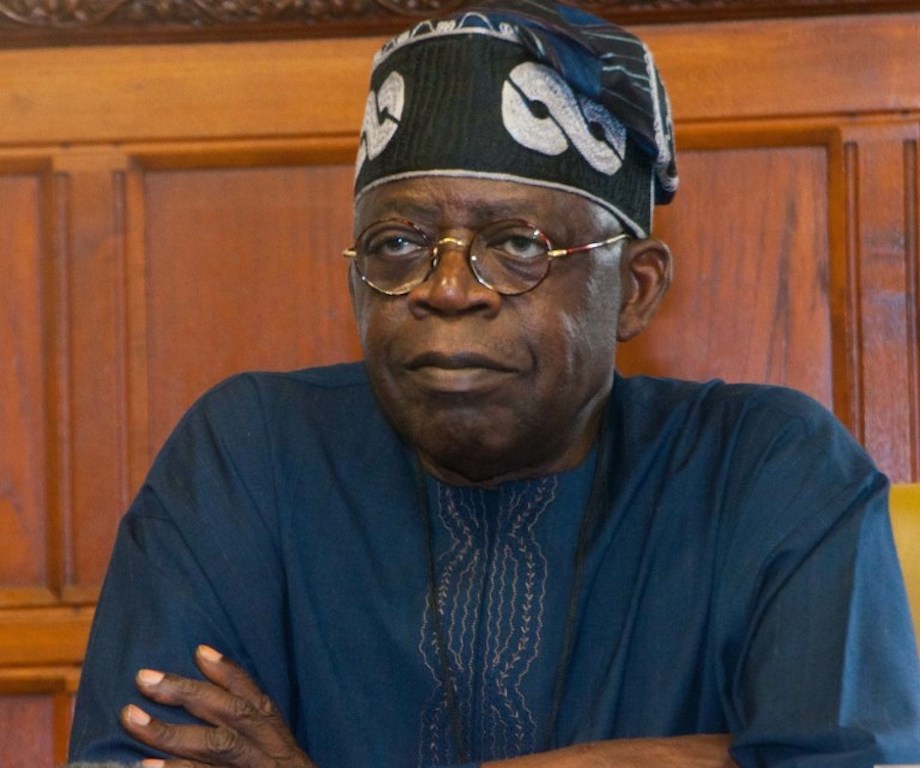
The tragedy prompted President Bola Tinubu to express condolences to the bereaved families and the Nigerian Air Force, while ordering an investigation into the crash.
The President declared three days of national mourning and directed that flags be flown at half-mast across the country in honour of the deceased personnel.
“This is a painful moment for our Armed Forces and for the entire nation. Our Air Force personnel put their lives on the line every day to secure Nigeria. Their sacrifice will never be forgotten,” Tinubu said in a statement issued by the State House.
He said he had directed the Chief of the Air Staff, Air Marshal Sunday Kelvin Aneke, to commence a thorough investigation into the cause of the crash to help prevent similar incidents.
Tinubu also commended the Air Force for activating search-and-rescue operations and acknowledged the response of emergency personnel and the Ondo State Government.
Why recovery has proved so difficult
The recovery operation has exposed the physical challenges of working in Igbokoda’s swampy environment.
Ondo State Commissioner for Environment, Tob Loko, described the aircraft as having plunged into the water and broken into pieces. He said divers initially struggled to locate the wreckage, managing to retrieve only fragments before heavier equipment was deployed.
The response has involved the Nigerian Air Force, Nigerian Navy, Army, police, National Emergency Management Agency, Nigeria Security and Civil Defence Corps, Amotekun Corps, Ondo State Government, local authorities and community volunteers.
On October 8, Air Marshal Aneke visited the site to assess the operation and meet personnel involved in the recovery effort. He said relevant evidence would be secured, documented and preserved for investigation.
The Head of the Investigation and Recovery Team, Air Vice Marshal EOE Ebiowe, has also been coordinating recovery activities with the participating agencies.
As the search continued, specialised sonar equipment was deployed to help locate the submerged aircraft. The Navy’s hydrographic personnel were tasked with obtaining an underwater picture of the site, where high turbidity had made visibility difficult.
The Air Force also began searching for the flight data recorder and cockpit voice recorder, commonly referred to as the black boxes. These devices can provide important evidence about the aircraft’s performance, system parameters and cockpit communications before the crash.
“We hope to be able to find critical components of the aircraft that will speak to the investigators because the aircraft wreckage actually speaks to the investigators,” Ebiowe said.
He explained that the flight data recorder and cockpit voice recorder were among the critical components investigators hoped to recover.
By Tuesday, October 13, recovery teams were building embankments to restrict water flowing into the crash area. Swamp buggies were being used to excavate and raise mud, creating better access to the lower parts of the wreckage.
A swamp-buggy operator, Adeleye Temitope, told Premium Times that the machines were helping the team lift mud and keep the area accessible.
“The work is still ongoing and the swamp buggies are helping us lift the mud to the heights needed to keep the areas clear,” he said.
Another person involved in the operation, Odunsola Dada, popularly known as General, said the difficult conditions would not stop the effort to retrieve the victims.
“We are going to continue to work until we remove what is remaining,” Dada said.
These accounts offer a glimpse of the human effort behind the recovery operation: divers, technicians, machine operators and local volunteers working in difficult conditions to recover evidence and remains.
The river becomes another source of fear

As recovery efforts continued, the tragedy began to affect residents beyond the immediate crash site.
The surrounding waterways are important to Igbokoda’s daily life and local economy. Residents use them for domestic activities and rely on the area’s aquatic resources for their livelihoods.
The crash has raised concerns about the possible effects of decomposing remains and suspected aviation fuel or oil in the water. Residents have complained of an increasingly offensive smell, while community leaders have called for urgent recovery work and environmental intervention.
The traditional ruler of Igbokoda, Oba Afolabi Odidiomo, said that residents were worried about the condition of the water and the consequences for their community.
“The concern of everybody in this community today is that our government spent time, energy, money, and effort looking for people that had been chopped into pieces by the crash,” he said, describing the distress caused by remains in the water.
He also expressed concern about children who normally use the waterway and about the potential damage to fish and other sources of livelihood.
Governor Aiyedatiwa has directed the state ministries of environment and health to begin extensive fumigation of the river in response to complaints about the smell.
He also directed the Ilaje Local Government Area to arrange water tankers to provide potable water if the river is found to be severely polluted and unsuitable for use. The state government further ordered the provision of nose masks and other essential health kits to residents while the situation is addressed.
The measures acknowledge that the impact of the crash may extend beyond the loss of those on board. For residents, access to safe water and the protection of their livelihoods are now part of the emergency.
Investigation panel set up
The Nigerian Air Force announced on October 13 that it had constituted a 12-member Aircraft Accident Investigation Board to establish the circumstances and causes of the crash.
Air Vice Marshal F.O. Ankeli will head the board, while Air Vice Marshal E.O.E. Ebiowe, who leads the Investigation and Recovery Team, will coordinate the wider response.
The board includes specialists in aviation operations, flight safety, piloting, air traffic control, aircraft engineering, maintenance and medical services. Representatives of the Nigerian Civil Aviation Authority and the Nigerian Safety Investigation Bureau are also involved to provide civilian aviation expertise.
According to the Air Force, the investigation will examine operational, technical, environmental, human and organisational factors that may have contributed to the accident. It will also review the emergency response, search-and-rescue efforts, recovery operation and management of the crash site.
The service said the findings would inform recommendations to improve aviation safety and reduce the risk of similar incidents.
“Conclusions regarding the cause of the accident would be premature until the investigation is completed and its findings are duly considered,” the Air Force said.
Experts urge caution as questions emerge
The crash has renewed questions about military aviation safety, aircraft maintenance and the need for a transparent investigation.
Retired naval officer Commodore Promise Dapper, speaking on Channels Television, cautioned against ruling out possible explanations before the investigation is complete. He referred to eyewitness accounts of aircraft fragments appearing to fall before the plane reached the ground, but his comments did not establish sabotage or any other cause.
“You cannot rule out sabotage; air attack, you cannot rule out anything,” Dapper said, adding that all possibilities should be considered.
The National Assembly has also begun addressing the wider safety questions. On October 13, the Senate resolved to investigate budgetary provisions for the maintenance of Nigerian Air Force aircraft, following concerns raised by Senator Osita Ngwu, chairman of the Senate Committee on Air Force.
The debate has placed aircraft maintenance funding and recurring military aviation accidents under scrutiny. But the crash investigation must determine whether maintenance, technical failure, operational conditions, human factors or another issue played a role in this particular incident.
A community still waiting
For Igbokoda, the search is about more than retrieving metal fragments from a swamp. It is about recovering the remains of people whose families are waiting for closure, restoring confidence in the safety of local waterways and ensuring that the community is not left to bear the environmental consequences of a national tragedy.
The Air Force has pledged to preserve evidence, support affected families and implement appropriate safety recommendations after the investigation. The state government has announced measures to address residents’ concerns about the river and access to safe water.
Yet the central questions remain: What caused NAF 931 to crash? Can investigators recover its flight recorders and enough wreckage to reconstruct the final moments of the flight? What measures will ensure that the families receive the information and support they need? And will independent assessment establish whether the waterway has been contaminated?
The answers will depend on the work of investigators and the response of the authorities in the days ahead.