
High cost of feed forces poultry farmers out of business in Kebbi, Sokoto, Zamfara
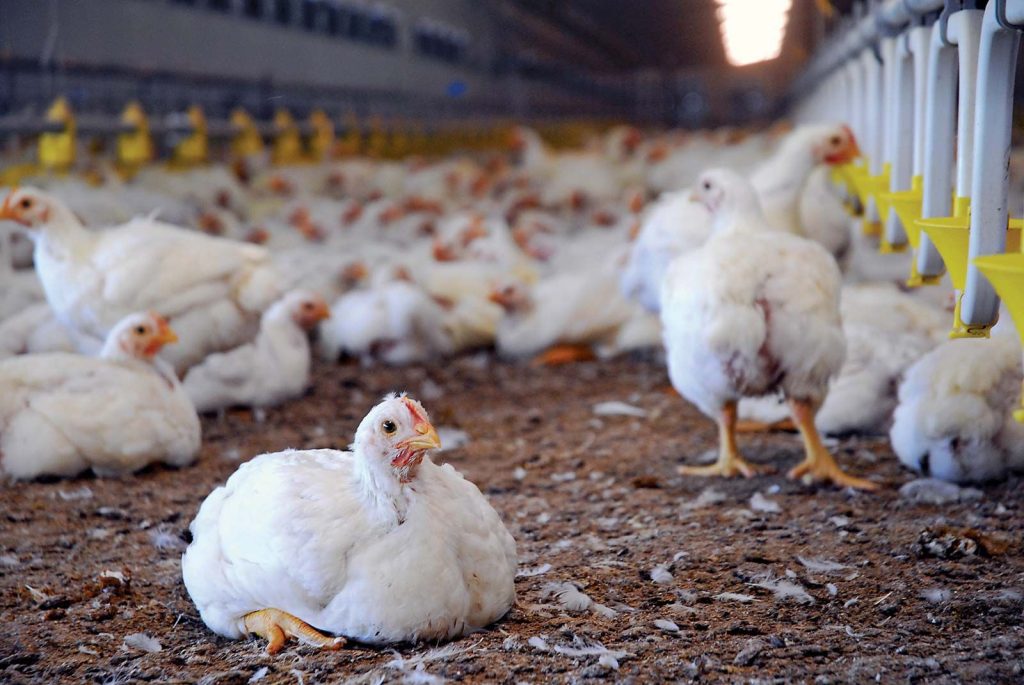
A number of poultry farmers and other livestock breeders in Kebbi, Sokoto and Zamfara States have abandoned their businesses due to the rising cost of animal feed, the News Agency of Nigeria (NAN) reports.
A NAN survey across the three states revealed that feed prices had continued to rise, partly because insecurity had prevented many rural farmers from cultivating their land.
The situation has forced many residents to relocate to urban areas, while some livestock businesses in towns have also shut down.
A veterinarian in Kebbi, Dr Abubakar Umar-Bunza, said the rising cost of feed was pushing poultry farmers out of business, with some small-scale operators already shutting down.
Umar-Bunza, who is in charge of the Zonal Veterinary Clinic in Birnin Kebbi, told NAN that the removal of fuel subsidy had also fuelled inflation, increasing the cost of producing crops used in animal feed.
He explained that maize accounted for about 55 per cent of poultry feed, noting that a 100kg bag had sold for almost N70,000 at its peak, while the same quantity of soya beans cost more than N90,000.
“If the major ingredients are expensive, the price of feed must also be high,” he said.
He identified transportation, fertiliser costs, exchange rates and insecurity as other factors driving up feed prices.
According to him, insecurity has restricted farmers’ access to their farms, while competition between humans and animals for grains has further reduced supplies.
He said transporting 1,200 bags of feed from Kano, which previously cost about N300,000, now required between N1.2 million and N1.5 million.
The veterinarian lamented the absence of a regulatory body to check feed prices, adding that the cost of feed had remained high between 2025 and 2026.
“I am a consultant to over five poultry farms. Some of them have shut down because they could not sustain the business.
“You cannot keep the animal without feeding, and the eggs and the chickens produce are directly proportional to the feed they consume,” he said.
He explained that poultry farmers also faced huge expenses in raising layers, which required daily feeding from eight weeks until they started laying eggs at between 16 and 20 weeks.
On broiler production, Umar-Bunza said a day-old chick cost about N2,000, while raising 50 birds required between six and seven bags of feed.
He said that after accounting for vaccines and labour, farmers who sold their birds for between N8,000 and N9,000 struggled to recover their investment.
He also warned that using poor-quality feed could weaken birds’ immunity and expose them to diseases, while mixing feed with cheaper ingredients could reduce egg production.
The Commissioner for Animal Health, Husbandry and Fisheries, Alhaji Kabiru Alaramma, said the Kebbi Government was nearing completion of a veterinary hospital at Bulasa to strengthen livestock production.
He said the project, which was initiated 13 years ago but abandoned, had been revived by Gov. Nasir Idris, describing it as the largest veterinary hospital in the country.
The state’s Director of Veterinary Services, Dr Alheri Ibrahim-Senchi, said the facility would have clinics for small and large animals, poultry and other birds, as well as surgical theatres and a laboratory.
He added that it would serve as a referral and training centre, offering residency programmes in collaboration with academic institutions.
Ibrahim-Senchi said foreign partners, including Brazil, had expressed interest in the state’s livestock sector.
He explained that countries importing Nigerian beef required certification that the meat met international standards.
“They are aware that we have the capacity to ensure that our animals are fit for human consumption,” he said.
He added that a standard laboratory was essential for artificial insemination, as semen samples had to be processed and properly preserved before use.
Poultry farmers in Kebbi also expressed concern over rising production costs, saying the prices of eggs and other poultry products had not increased proportionately.
Madina Ya’u, who operates a poultry farm in Gesse Phase II, Birnin Kebbi, said she had been forced to reduce the number of birds on her farm.
She attributed the situation to rising expenditure on feed, vaccines and workers’ salaries.
Another farmer, Armiya’u Bulasa, said the high cost of production had discouraged small-scale operators, forcing some to abandon the business.
In Zamfara, the President of the Poultry Association of Nigeria (PAN), Zamfara Chapter, Alhaji Zayyanu Ahmad, said farmers were also struggling with declining patronage amid the prevailing economic hardship.
He said the poultry industry, despite its contribution to Nigeria’s Gross Domestic Product, was experiencing serious setbacks because of rising feed prices.
Ahmad called on the government to intervene, noting that a bag of feed that sold for N9,000 last year now cost between N20,000 and N23,000.
He added that prices of maize and soya beans, the major ingredients, had also increased significantly.
A market survey showed that starter feed sold for about N22,500, finisher feed for N22,000 and layer feed for approximately N16,000.
In Minna, broiler feed reportedly sold for about N24,000, while layer feed cost around N15,000.
Another farmer, Mallam Ibrahim Usman, told NAN that a tonne of maize cost N910,000, while a metric tonne of soya beans sold for N714,000.
He attributed the high prices to reduced agricultural production caused by insecurity and climate change.
Usman said the situation was worsened by insecurity in farming communities, expensive transportation and diesel, as well as poor roads, which increased the cost of moving feed, chicks and veterinary supplies to Gusau and other markets.
“Feed accounts for about 75 per cent of poultry production costs, making the availability of affordable grains critical to the survival of poultry businesses.
“Zamfara farmers buy feed at a high price but are forced to sell eggs and broilers below profitable levels because consumers’ purchasing power has dropped.
“A crate of eggs now sells for about N6,200 in some markets amid declining consumepulr purchasing power, while broilers fetch between N8,000 and N12,000 depending on size, despite huge spending on feeds and vaccines,” he said.
He said poultry farmers in Gusau, Kaura Namoda, Talata Mafara, Anka and other communities faced similar difficulties, with feed accounting for between 70 and 75 per cent of their production expenses.
Usman urged the government to subsidise feed ingredients, support local maize and soybean production and establish affordable feed-milling facilities.
In Sokoto, the Commissioner for Animal Health and Fishery Development, Alhaji Bello Wamakko, said the state government had made provision for increased funding of subsidised animal feed in its 2027 budget.
He said the measure was aimed at supporting livestock breeders, who constituted a significant proportion of the state’s farming population, just as crop farmers received assistance during the wet and dry seasons.
A small-scale livestock keeper, Safiyanu Musa, said he had sold about 15 goats because he could no longer afford to feed them.
He explained that livestock breeders usually obtained cheaper feed during the October and November harvest periods, but insecurity had prevented rural farmers from bringing supplies to urban markets.
Another livestock keeper in Diploma Area, Sokoto metropolis, Alhaji Abdullahi Danyawuri, described animal rearing as increasingly difficult because of the exorbitant cost of feed.
He said many of his colleagues had either abandoned the business or reduced their stock because proceeds from sales could no longer cover production expenses.
A cattle rearer in Rijiyar Dorowa, Sokoto metropolis, Malam Nasir Mojo, said he had switched from cattle to goat rearing because of the high cost of feed and unfavourable market conditions.
He said the rising costs had also forced many households, including women who previously engaged in small-scale animal rearing, to abandon the activity.
Mojo identified access to affordable loans as another major challenge facing livestock breeders.
“We find it difficult to access loans with affordable interest rates. If farmers can access loans, they can plan better and purchase raw materials in bulk to produce their own feed.
“Subsidising feed production inputs and establishing government-supported feed production plants will go a long way in cushioning the effects of rising inflation on farmers,” he said.
He added that livestock rearing, once a source of income for many residents, was no longer profitable, forcing some operators to seek alternative businesses.
Some business owners warned that without urgent government intervention, more poultry farms and livestock businesses could collapse, resulting in job losses and possible shortages of eggs and chicken.
They also warned that rising production costs could further increase protein prices, worsening the burden on households already struggling with food inflation.
The farmers appealed to the government to provide subsidised feed, improve access to agricultural inputs and offer affordable loans to reduce production costs.
(NAN)