
I miss seeing the real faces of Nigerian women
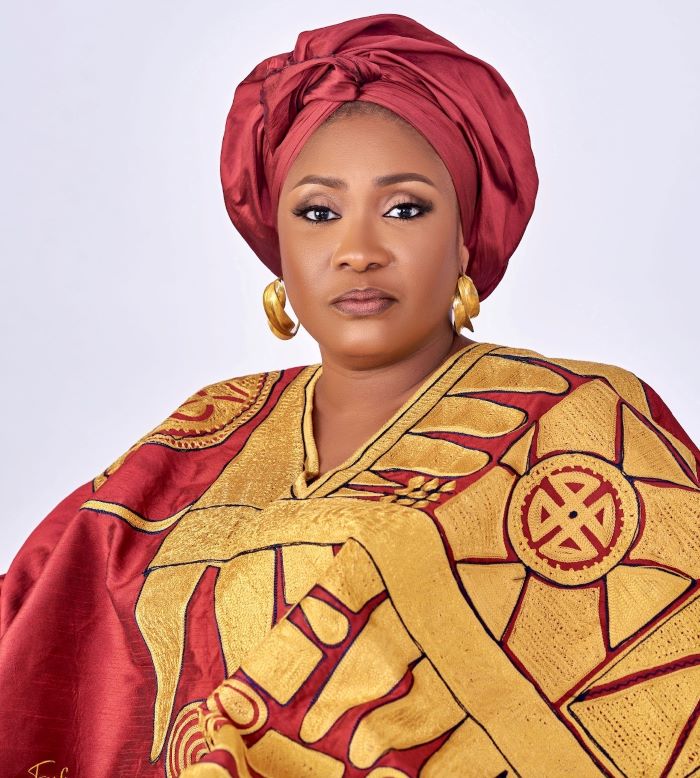
By Temitope Lakisokun
One of my unexpected pleasures on social media these days is looking through photographs of church congregations. I should probably mention this has nothing to do with my spiritual life. I am not looking for a miracle or even paying particular attention to the notices. I have discovered that photographs posted by churches serve another purpose: they remind me what Nigerian women actually look like.
Scroll through photographs and videos from recent Nigerian parties and it would seem we all agreed, at some point, that a woman cannot attend any event without first being rendered almost unrecognisable.
The eyebrows have to be redrawn. The eyelashes require a postcode of their own. The gele is almost always an architectural construct and the face must be contoured, highlighted, shaded, sculpted and slathered in foundation until it bears only a passing resemblance to the woman who woke up that morning.
The result is an identikit parade of women working from the same instruction manual. Everyone looks beautiful.
Everyone looks like money. And, increasingly, everyone looks like everyone else.
Sometimes I look at these photographs and wonder whether St Peter wouldn’t have some difficulty matching the women to their passports when they eventually arrive at the Pearly Gates.
The aforementioned church photographs are the opposite. No two women are alike, and I love that.
Most churches, orthodox and Pentecostal alike, now have in-house photographers whose job is to photograph the congregation and upload the pictures online. Perhaps the intention is evangelistic: Look at all these happy people! See what you are missing!! Come to church next Sunday!!!
Me, I have another use for them. I look at the women because the pictures offer a welcome change.
Please don’t get me wrong. I have nothing against makeup. I understand the pleasure of dressing up, and a good makeup artist can create magic. Some women, frankly, look considerably better made up. But I don’t think any woman needs a professionally done face for church, and certainly not at six o’clock on a Sunday morning. God has already seen you without it.
Something else I like about the church photographs are the clothes. I like the modesty of Sunday dressing. The simple fact that people can be well dressed without looking as though they have been informed that this is their last opportunity to be seen in public.
A friend of mine once said that some people dress like they have been given a death sentence. They dress as though somebody has told them: You have one day left! Wear everything you own!
So, they arrive in the most elaborate get-up they possess, with staggering jewellery, tottering heels and enough accessories to suggest that nothing has been left at home.
There is, of course, a certain Nigerian logic to this. If the occasion is important, you must look important. Someone else is celebrating, so you must arrive looking like a person who has also been celebrated. If there is aso-ebi, you must not merely wear it. You must establish, beyond reasonable doubt, that you bought it. With your own money.
Going to church does not require that much evidence, although Sunday best also has its own code. Modesty and respectability are forms of performance too, and nobody dresses for church in a vacuum.
Still, I enjoy seeing a woman in a simple outfit, perhaps a kaftan, a skirt and blouse, a modest gown or a two-piece, with gele or turban or fascinator. There may be jewellery, but it does not necessarily arrive before the woman wearing it. You will see someone else in a simple iro and buba and a face that still looks like her own. She is beautifully turned out, but there’s nothing about her appearance that demands the congregation to stop what it is doing to admire her.
I love the fact that no two women tie their gele in quite the same way. One will make hers dramatic. Another will find an ingenious way to fold the fabric so that it sits perfectly on her head at a jaunty angle. Give a hundred women the same fabric and you would get a hundred different gele styles.
You will see taste in it. You will see confidence. You will see whether she likes drama or subtlety. Sometimes you will even see that she has simply tied the thing in one take and really couldn’t be bothered what anyone else thinks.
Yoruba people have an expression for this: já gèlè. There is a distinction between this and wé gèlè or ta gèlè, which suggest more elaborate, carefully constructed gele. Já gèlè looks more effortless, unbothered and unfussy. I suspect this is what the Italians mean by sprezzatura.
And all this isn’t even about whether a woman wears make-up or not. It’s about her own personal expression surviving the dressing-up. Some of the women in these church photographs wear makeup. Some wear jewellery. Some have clearly spent time and money on how they look. The key difference is that you can still see them in it.
I don’t want to see a hundred women who look as though they were assembled from the same catalogue. I want to see a hundred women who have each found their own way of looking beautiful. In these days of so much artifice, that is quite a pleasure.
Praise the Lord!
*Temitope Lakisokun, a political consultant, historian, and Chair of Trustees of The Tarihi Trust Foundation, writes from Lagos. Tarihi Trust is a Pan-African foundation for memory, history, and civic understanding. She writes at: www.onethingafteranother.ng