
Lagos Govt warns residents against adulterated palm oil
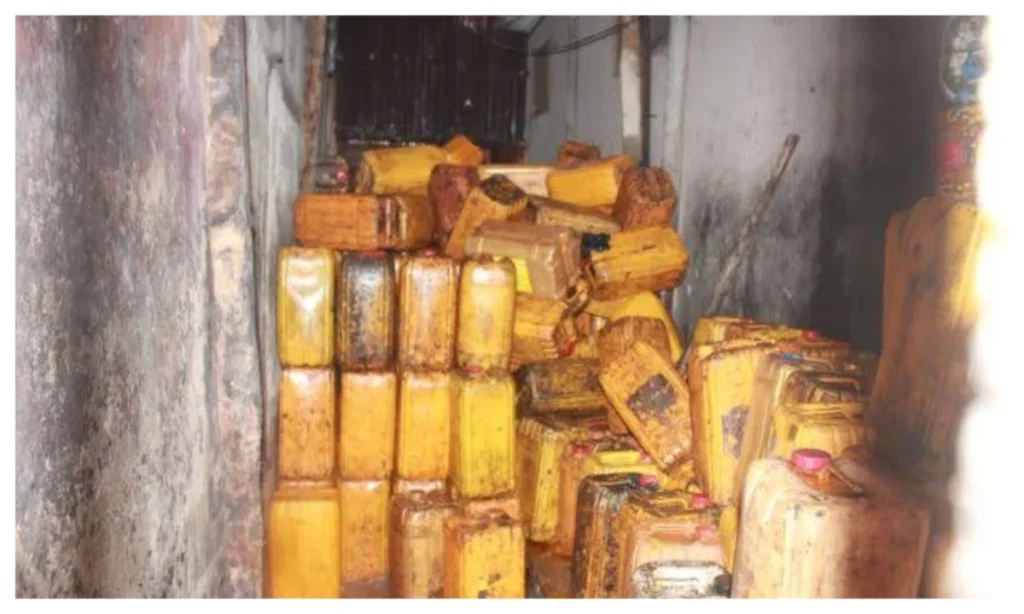
The Lagos State Consumer Protection Agency, LASCOPA, has raised the alarm over the increasing presence of sophisticated adulterated palm oil in markets across the state.
The agency issued the warning following a technical presentation at the Lagos State Food Safety Conference and Exhibition by a Senior Lecturer in the Department of Food Technology, Auchi Polytechnic, Dr Nurah Oseni.
LASCOPA urged consumers to remain vigilant and promptly report suspected cases through its official channels as the agency intensifies surveillance across markets in the state.
The General Manager of LASCOPA, Afolabi Solebo, reaffirmed the agency’s commitment to protecting consumers from unsafe and substandard products.
Solebo urged Lagos residents to “shine their eyes” and report suspected adulterated palm oil as well as unscrupulous traders to the agency.
He said market surveillance had been stepped up across the state, warning that anyone found involved in the sale of adulterated palm oil would be arrested and prosecuted in accordance with the relevant laws.
Presenting her paper titled, ‘Palm oil adulteration: Emerging risks, detection strategies and regulatory control,’ Oseni identified several factors that make palm oil particularly susceptible to adulteration.
She cited the product’s high trading volume, consumers’ preference for deep-red palm oil as an indication of quality, price differences, informal market practices and the difficulty of detecting sophisticated adulterants.
According to her, emerging forms of adulteration include the use of potentially carcinogenic Sudan and Azo dyes to intensify the colour of palm oil.
She also identified the blending of palm oil with recovered or recycled oils, including spent cooking oil, as another emerging concern.
Oseni further warned about multi-adulterant mixtures designed to bypass basic quality-control checks, making some adulterated products increasingly difficult to identify through conventional methods.
The lecturer advised consumers to adopt simple visual checks as an initial precaution when purchasing palm oil.
She explained that genuine palm oil could naturally separate into layers, with the lower portion appearing orange to red-yellowish rather than having a uniformly deep-red colour.
However, Oseni cautioned that visual inspection alone was not sufficient to conclusively determine whether palm oil had been adulterated.