
Lagos targets youth-driven growth with demographic dividend budget reforms
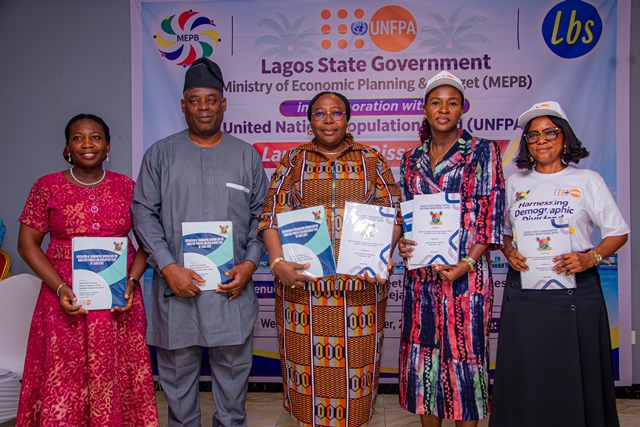
The Lagos State Government is seeking to align public spending with demographic dividend priorities to harness the economic potential of its growing youth population and accelerate development.
The initiative is expected to strengthen the integration of population-related priorities into government budgets and development plans, ensuring that investments in health, education, employment and social protection translate into improved living standards and economic opportunities.
The Permanent Secretary, Ministry of Economic Planning and Budget, Mrs Olayinka Ojo, disclosed this on Wednesday at the launch of two demographic dividend reports developed in collaboration with the United Nations Population Fund (UNFPA) in Ikeja, Lagos.
The reports are titled Integration of Demographic Dividend into the Budgetary Process and Development Plan of Lagos State and Lagos State Demographic Dividend Monitoring Index.
Ojo said the documents would provide evidence-based guidance for government planning, budget preparation and resource allocation, urging ministries, departments and agencies (MDAs) to incorporate their recommendations into programmes and spending priorities.
She cautioned against treating the reports as documents meant merely for public presentation, stressing that their findings must guide actual government decisions.
“There is nothing that helps planning like evidence-based planning. When you have something to reference, something to draw from, it will be a disservice to Lagos State if, after launching this report, we close it off without making reference to it,” she said.
The Permanent Secretary said Lagos needed deliberate investment decisions to address the demands of its growing population, particularly its young people, and improve their prospects for productive participation in the economy.
She recalled that the state began considering a realignment of its spending priorities in 2024 after recognising the importance of incorporating demographic dividend planning into its development strategy.
Ojo urged government planners and administrators to use the reports in preparing and reviewing budgets, noting that how effectively Lagos manages its population structure would have significant implications for its long-term economic prospects.
In a technical presentation, Dr Oyeteju Odufuwa, Senior Research Fellow at the Health Policy Training and Research Programme, University of Ibadan, outlined the major pillars of the demographic dividend framework.
They include health and wellbeing, education and skills development, employment and entrepreneurship, good governance, social protection and migration.
Odufuwa said the health and wellbeing pillar identified five investment options and 23 activities, while education and skills development had five investment options and 22 activities.
Employment and entrepreneurship also contained five investment options and 17 activities, while good governance had four investment options and 16 activities.
She explained that the activities were developed through a collaborative process involving relevant state institutions and stakeholders during a five-day workshop.
According to her, the budget integration exercise involved mapping activities in the demographic dividend roadmap against the state’s chart of accounts to determine how public spending aligns with the identified priorities.
She said the exercise would enable the government to track resources allocated to demographic dividend activities systematically and improve policy coordination across ministries and agencies.
Odufuwa emphasised that demographic dividend does not occur automatically but depends on deliberate policies and investments capable of converting population growth and a favourable age structure into economic gains.
Also speaking, the UNFPA representative, Mrs Jaiyeola Ayanbadejo, described Lagos as a leading state in demographic dividend planning, commending its sustained partnership with the organisation.
She said the framework was important because it connects population trends with development outcomes, particularly youth empowerment and economic growth.
“Demographic dividend is not automatic, and of all the states that UNFPA supports in Nigeria, Lagos State has been the centre of excellence,” Ayanbadejo said.
She recalled that UNFPA’s partnership with Lagos on demographic dividend initiatives began around 2015, leading to the development of a roadmap, its integration into the state’s development plan and the establishment of a monitoring index.
Ayanbadejo added that the framework also supports UNFPA’s transformative goals, including ending preventable maternal deaths, meeting family planning needs and eliminating harmful traditional practices.
She praised the state government for sustaining its commitment to the initiative and reaffirmed UNFPA’s readiness to continue supporting Lagos in translating demographic dividend planning into development outcomes.