
Professor Mugnii Alabi Danmole: The scholar who helped shape Lagos
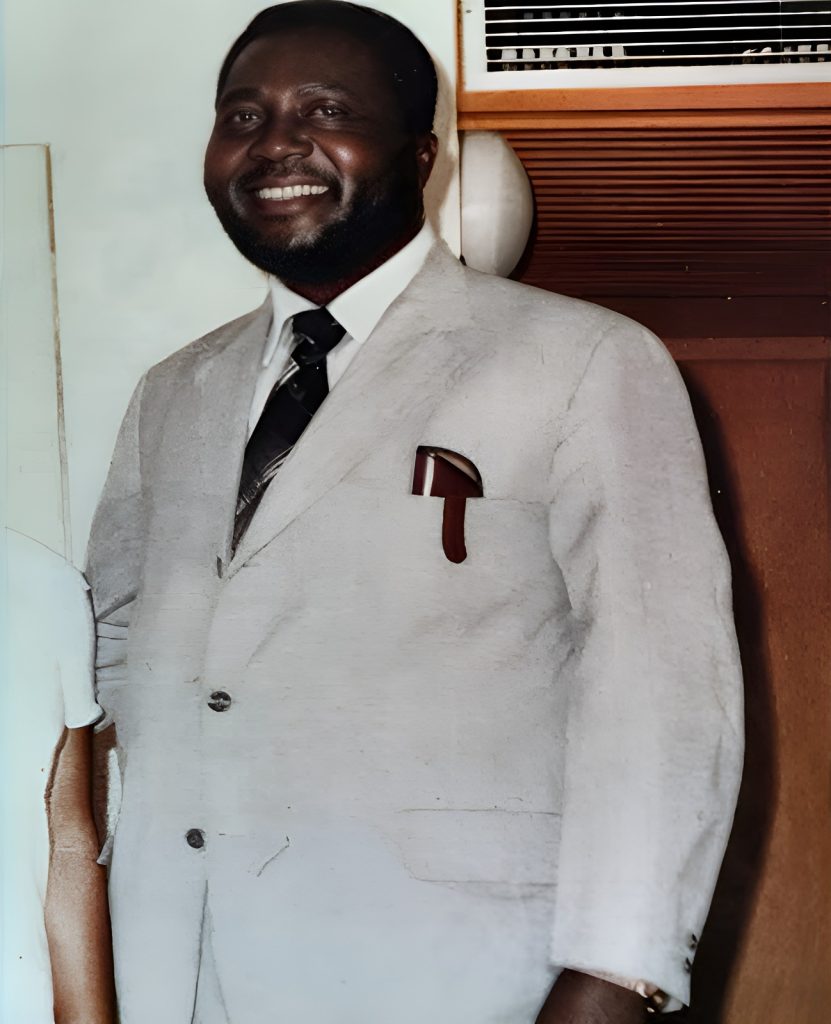
Thirty years after his death, the life of Professor Mugnii Alabi Danmole remains a story of scholarship, public service, indigenous leadership, and an enduring commitment to Lagos.
There are people whose lives are measured by the offices they occupy and the titles attached to their names. There are others whose influence goes beyond official positions, surviving in the institutions they helped build, the people they mentored, and the ideas they left behind.
Professor Mugnii Alabi Danmole belonged to the latter category.
Born on 1 November 1925 into the prominent Danmole family of Lagos and passing away on 22 September 1996, Danmole lived through some of the most important chapters in Nigeria’s history, the final years of colonial rule, the struggle for independence, the birth of the First Republic, military rule, and the creation and development of Lagos State.
He was an economist, statistician, academic, public servant, consultant, political thinker and respected Lagos indigene. But beyond these titles was a man whose life reflected a deep belief in education and service.
His story is particularly significant to Lagos, whose political and institutional evolution he witnessed and helped shape.
The Making of a Scholar
Danmole’s intellectual journey began at Methodist Boys High School, Lagos. At a time when university education was still the preserve of a very small number of Nigerians, he secured a federal scholarship to pursue advanced studies in the United States.
Between 1950 and 1954, he studied Economics at DePaul University, Chicago. He proceeded to the University of Chicago, where he obtained an MA in Economics between 1954 and 1956.
His academic journey later took him to the Wharton School of Finance and Commerce at the University of Pennsylvania, where he obtained a PhD in Economics between 1962 and 1964 and also lectured.
He would later earn a DSc in Economics and serve as an external professor at the Bulgarian High Institute of Economics, “Karl Marx”, Sofia, Bulgaria.
For a Nigerian of his generation, these achievements were remarkable. But what made his education truly significant was that he returned to Nigeria and put his knowledge to work.
He lectured at the University of Nigeria, Nsukka, and the University of Lagos, helping to strengthen Nigeria’s emerging university system.
Before and alongside his academic career, he also served as Special Assistant to the Managing Director of ESSO West Africa, working as an economist and statistician.
His experience therefore straddled academia, business and public administration.
The philosopher Francis Bacon’s famous observation that “knowledge itself is power” takes on special meaning in Danmole’s life. He acquired knowledge, but he also converted it into public service.
From the Classroom to Public Service
Danmole’s influence extended far beyond the university. Between 1970 and 1975, he served as a member of the Industrial Arbitration Tribunal established by the Gowon administration to help resolve industrial disputes.
In 1975, the Murtala Muhammed administration appointed him Federal Commissioner for Public Service, a position he held until 1978. He also served on several important government committees.
He was a member of the Lagos delegation to the Ad Hoc Committee on the review of the Nigerian Constitution under the Gowon administration.
He served on the Dr Elias Committee on Prison Reform and was recognised as a member and “Leader of Thought” in Lagos State.
These assignments demonstrated the confidence successive governments placed in his intellectual capacity and judgement.
His contribution was not restricted to economics. He brought his expertise to constitutional affairs, labour relations, public administration and institutional reform.
His Lagos Contribution
Perhaps the most important chapter of Danmole’s public life was his contribution to the development and political evolution of Lagos.
He belonged to a generation of Lagos intellectuals and political actors who campaigned for the recognition of Lagos as a distinct political entity and participated in the processes that eventually culminated in the creation of Lagos State in 1967 under General Yakubu Gowon.
Lagos was already changing rapidly. The former colonial capital was becoming Nigeria’s commercial and political centre, attracting people from across the country and beyond.
This transformation brought opportunities but also raised questions about identity, representation and the political rights of indigenous Lagosians.
Danmole became part of the generation that insisted that the history and interests of Lagos’s indigenous communities should remain an important part of the state’s political development.
His contribution was not limited to political advocacy. He was involved in practical aspects of building the new state.
Under the administration of Brigadier Mobolaji Johnson, the first military governor of Lagos State, Danmole served on the Lagos State Armorial Bearing Committee and the Lagos State Revenue Collection Panel chaired by the renowned accountant Akintola Williams.
Under Governor Adekunle Lawal, he served on the Lagos State Committee on Local Government Reform.
These assignments covered three essential dimensions of state-building: identity, revenue and grassroots administration.
He was also remembered as a “silent adviser” to the Lagos State military government.
This behind-the-scenes role perhaps captures something important about his personality. He was not necessarily a man who needed the spotlight to make an impact.
His influence often came through knowledge, counsel and participation in institutions.
The Politics of Identity and Belonging
Danmole’s place in Lagos history is also connected with the politics of indigeneity.
He belonged to a group of Lagos leaders who believed that meritorious Lagos indigenes should retain a meaningful role in determining the political direction of their state.
The issue was particularly important at a time when Lagos was experiencing rapid migration and demographic change.
The debate was ultimately about more than political office. It concerned the relationship between a city’s history and its future.
Modern Lagos has become a vast, cosmopolitan metropolis. Yet beneath its contemporary identity remain the ancestral communities, families, traditions, and institutions that gave Lagos its original character.
Danmole’s generation understood that development should not necessarily mean the disappearance of history.
The philosopher George Santayana famously observed that “those who cannot remember the past are condemned to repeat it.”
Danmole’s contribution to Lagos is therefore part of a history worth remembering, not merely as nostalgia, but as a reminder of the people and ideas that helped shape the state.
The Man Behind the Public Figure

Beyond the professor and public servant was a family man.
Danmole was a loving husband, father, grandfather, brother, uncle, friend and mentor.
His legacy therefore exists not only in official records and academic achievements but also in family memories and the lives of those he influenced.
The oriki of the Danmole family invokes courage, resilience, dignity and fearlessness.
Such praise poetry is more than ceremonial language. It carries history from one generation to another. It provides a bridge between the past and the present.
For Danmole’s family, his name represents not only intellectual achievement but also an inheritance of character and responsibility.
Thirty Years Later
Thirty years after his death, Lagos has changed enormously.
The city has expanded, its economy has become more complex and its population has grown.
Yet many of the questions that concerned Danmole’s generation remain relevant: How should institutions be built? How should public resources be managed? How can a rapidly changing society preserve its historical identity? And what responsibilities come with leadership?
Danmole’s life offers no simplistic answers, but it provides an example.
He was educated abroad but returned home to serve. He was an academic but did not remain confined to the classroom. He worked in business but also entered public service. He participated in politics without allowing political activity to define the whole of his identity.
His life demonstrates that leadership is not simply about occupying an office. It is about making one’s knowledge and experience useful to society.
As the philosopher Ralph Waldo Emerson put it, “The purpose of life is not to be happy. It is to be useful.”
That description resonates strongly with Danmole’s journey. He was useful to his students, colleagues, government, family, and, above all, to Lagos.
His journey ended on 22 September 1996, but his story did not.
Thirty years on, Professor Mugnii Alabi Danmole remains part of the historical memory of Lagos, a scholar who returned home, a public servant who offered his expertise, an intellectual who participated in the shaping of institutions, and a Lagosian who believed that the history and destiny of his people mattered.
The professor is gone. But the city to which he gave so much continues to bear the marks of the generation that helped build it.
And perhaps that is the essence of legacy: not that one’s name remains on every street, but that one’s ideas, service and example continue to live in the society one helped shape.