
The Missing Middle of Capital Recycling: The Capital That Never Comes Back
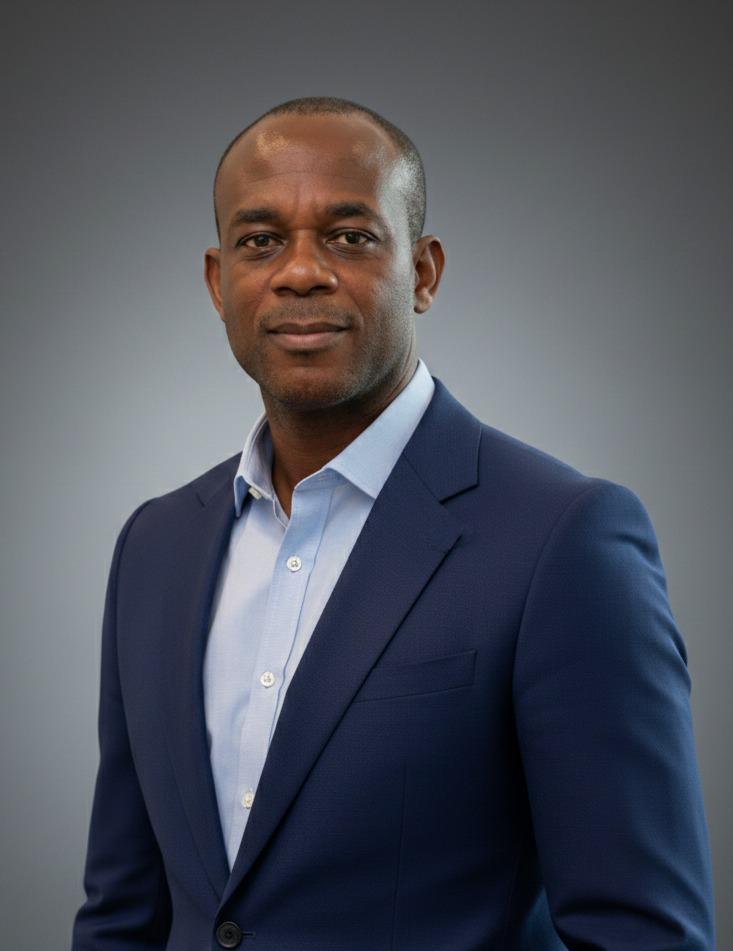
By Chidi Nwafor
In October 2024, Africa50 announced a $100 million asset recycling programme with the Government of Gambia and took over the operation of the Senegambia Bridge, a crossing that already existed and already carried traffic. A first tranche of $15.5 million was disbursed. A government had taken a mature asset, passed it to a long-term operator and released capital. A 2026 report from Africa50 and the African Development Bank still describes the transaction as an early proof point. Public reporting does not say what the proceeds will fund, which, as we shall see, is part of the lesson. The first three conditions are visible in Senegambia; the fourth is not.
This series has followed capital through availability, risk, bankability, structure, access, deployment and mobilisation, and then through revenue, currency and the public counterparty. All of it concerns getting capital into infrastructure. The Missing Middle of Capital Recycling concerns what happens after: the gap between a built asset that earns and the capital locked inside it. Money deployed once should be able to return and be deployed again. In most of Africa it does not.
The scale justifies the attention. Africa50 puts the continent’s infrastructure financing gap at between $68 billion and $108 billion. Closing it with new borrowing alone means more debt, at a time when governments have little fiscal room. Proponents argue that recycling is the one source that does not add to sovereign debt. That claim holds only if the proceeds are reinvested well.
Four things must hold. There must be an asset: operating, with a track record and rights that can be transferred. There must be a buyer: long-term capital with a mandate to own it. There must be a vehicle, whether a concession, a trust or a securitisation, that lets ownership move without breaking the revenue chain. And there must be a rule: the proceeds must flow into new infrastructure, not disappear into the general budget.
Australia built a policy around the fourth. Its Asset Recycling Initiative paid a state or territory a grant equal to 15 percent of the proceeds it reinvested in new infrastructure, funded from A$5 billion set aside out of the Medibank Private sale. New South Wales, for example, was allocated A$1,466 million for selling TransGrid, Ausgrid and Endeavour Energy, with the proceeds going into Sydney rail projects. The bonus was a reinvestment rule in disguise. It was also politically costly: selling public assets proved unpopular, and one commentator linked it to the loss of the Queensland government in 2015. The Parliamentary Library records committed payments, not measured outcomes.
India built a pipeline. Its first National Monetisation Pipeline, with a target of 6 lakh crore rupees, is reported to have met nearly 90 percent of it. The second, launched in February 2026, estimates 16.72 lakh crore rupees of potential through 2030 across roads, railways, power, ports, telecoms and other sectors, using concessions, infrastructure investment trusts and securitisation of cash flows. Both are state-led programmes with named instruments, named sectors and a senior committee watching progress. The lesson of both is institutional: a pipeline, a rule and an owner.
Africa has the capital. Nigeria’s pension industry held N31.32 trillion, about $22 billion, in May 2026, yet pension investment through infrastructure funds stood at N318 billion, roughly 1 percent by my arithmetic, though up 38 percent in a year. The regulator is developing a pooled vehicle to do more. Where a vehicle exists, the market responds. InfraCredit’s guarantees have supported 28 infrastructure companies, with N390 billion of guaranteed debt, tenors of up to 20 years, and 20 pension investors, managing about 75 percent of industry assets, subscribing to its bonds, which were oversubscribed by up to 60 percent. Some of that paper let projects refinance short-term, high-interest loans, which is capital recycling at the lender’s end: a bank leaves, and the bank’s balance sheet is free to lend again.
Why, then, does capital stay locked? Because every actor has a reason to hold on. Construction lenders and development banks take the hardest risk with no exit, so each deal consumes balance sheet that cannot be reused. Sponsors hold operating assets for decades because no buyer exists and cannot fund the next project. Governments retain mature assets because selling them is politically fraught and valuation is contested. Pension funds hold back because allocations are restricted and no vehicle is built for them. The result is a continent where some of the safest, most predictable assets sit with owners least able to deploy them elsewhere. Africa50 itself says pension allocations to infrastructure remain very limited in many markets and that regulatory reform is a key lever.
Recycling is also the final examination of everything that came before. A buyer pays for cash flows, so every weakness described in the earlier articles discounts the price. A utility that does not collect its revenue, a loan in the wrong currency, a counterparty that cannot honour its promise: each lower what a long-term investor will pay or removes the buyer altogether. An operating asset with an unreliable payer cannot be sold at a sensible price.
There are honest limits. Recycling is not a source of new money for assets that do not earn; the Africa50 and AfDB roundtable itself warns against using it to fund unprofitable projects. Selling a mature asset trades future revenue for cash today, a cost the IMF has flagged in the case of long-term PPP contracts as foregone future revenues. Public mistrust is real, as Australia showed. And a monopoly asset sold without strong regulation can transfer rent to private hands. Valuation is the hardest part: sell too cheaply and the public is shortchanged, ask too much and no buyer comes. Independent valuation, a competitive process and published terms are the minimum. Recycling suits assets with proven cash flows and regulated pricing.
Where it does apply, the responsibilities are clear. Governments should create national programmes with transparent valuation, public accountability and a binding rule that proceeds be reinvested in defined priorities, which is what the roundtable recommends. Development finance institutions should design the exit at origination, selling down operating assets to domestic institutions rather than holding them to maturity. Concession terms should protect the public interest, through tariff caps, handback conditions and step-in rights. Pension regulators should widen permitted allocations and finish the pooled vehicles. Sponsors should put the exit in the model on day one, naming the class of buyer expected to take it over. And investors should treat recycled assets as a distinct asset class, with their own diligence and their own pricing.
Capital that cannot leave a built asset cannot fund the next one, and capital that cannot find a buyer for it will not lend to the first. Until a built asset can be sold to someone who will keep it running, the money inside it stays frozen. That is the Missing Middle of Capital Recycling. Yet every article in this series has leaned on numbers that were hard to find: what a tariff covers, what a loan really costs, what a utility owes, what an asset earns. A buyer cannot price what it cannot see, and a lender cannot lend against what no one has measured. That is a question for another day.
Nwafor is founder and lead strategist at De-Lazuli Consult, an advisory practice focused on energy transition, project finance, Investment readiness Assessment, DFI engagement and infrastructure investment facilitation. He writes from Abuja.