
Tinubu Targets 5 Million Jobs from Nigeria’s Blue Economy
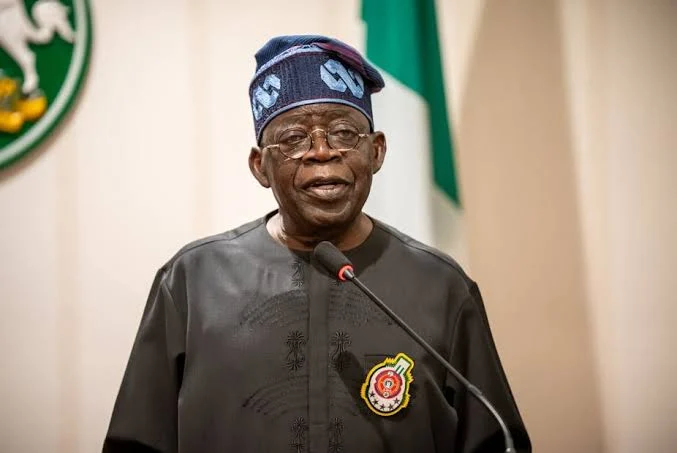

President Bola Tinubu on Wednesday reaffirmed Nigeria’s commitment to unlocking the economic potential of its oceans, saying the country is targeting five million new ocean-based jobs while seeking stronger African collaboration to tackle illegal fishing and maritime insecurity.
Tinubu stated this in a speech delivered at the opening ceremony of the 11th Our Ocean Conference in Mombasa, Kenya.
The President, represented by the Minister of State for Foreign Affairs, Ambassador Sola Enikanolaye, said Nigeria’s extensive maritime resources remain critical to food security, trade, energy and livelihoods, stressing that the country’s blue economy agenda is central to national development.
“Our ocean resources are central to food security, trade, energy and the livelihood of Nigeria. For Nigeria, the ocean is not only a source of prosperity but also a pillar of sovereignty, security and climate resilience,” Tinubu said.
The President noted that upon assuming office in May 2023, his administration elevated the blue economy to a national priority by creating the Federal Ministry of Marine and Blue Economy. According to him, the move underscores Nigeria’s determination to harness its vast maritime assets while promoting sustainable ocean governance.
Nigeria possesses about 853 kilometres of coastline and maintains strategic interests in the Gulf of Guinea, one of the world’s busiest maritime corridors.
Tinubu said the country remains committed to the United Nations Convention on the Law of the Sea and rule-based ocean governance. He called for greater African cooperation to combat illegal, unreported and unregulated fishing, describing it as a major threat to food security and economic stability across the continent.
The President disclosed that Nigeria had launched a Blue Economy Action Plan aimed at developing fisheries, shipping, maritime tourism and renewable energy as drivers of inclusive economic growth.
“We have launched a blue economy action plan aimed at developing fisheries, shipping, maritime tourism and renewable energy. This will enable us to achieve our pledge to create five million new jobs based on the ocean, prioritising youth and women, and ensuring that ocean industries uplift vulnerable coastal communities,” he said.
The President stressed the need for equitable financing and technology transfer to enable African countries to fully harness the benefits of ocean-based industries. He noted that Africa’s maritime resources remain underutilised despite their enormous potential to contribute significantly to economic growth and national development.
Tinubu also announced Nigeria’s environmental commitments, including expanding marine protected areas by 2030, restoring 50 per cent of degraded mangroves and championing continental efforts to eliminate single-use plastics.
He urged global support to address marine pollution and other threats to ocean ecosystems and coastal livelihoods. On maritime security, the President highlighted Nigeria’s role in the Yaoundé Architecture for maritime security in the Gulf of Guinea, calling for stronger regional cooperation through joint patrols, intelligence sharing and harmonised frameworks.
“Maritime security is inseparable from food security, trade facilitation and peace-building,” Tinubu said.
He added that Nigeria’s investment in modern technology and enhanced naval capabilities had significantly reduced piracy incidents in the Gulf of Guinea, thereby improving freedom of navigation and commercial shipping.
The President further emphasised the importance of partnerships involving governments, development banks, private-sector actors and civil society organisations in mobilising sustainable financing for ocean governance.
He welcomed stronger cooperation between Nigeria, Kenya and other African coastal states to advance ocean diplomacy and regional prosperity. Tinubu also underscored the need for greater participation of women and young people in ocean governance and decision-making processes.
According to him, inclusive governance is necessary to fully unlock employment and economic opportunities in the maritime sector. “Our ocean is our common heritage, and its future depends on the collective action we take today. We stand ready to collaborate, to lead, and to contribute to building a continent where maritime sovereignty is respected, security is guaranteed, and prosperity is shared,” Tinubu said.