
Wastewater Management: Nigeria Below 20% Treatment – NAE
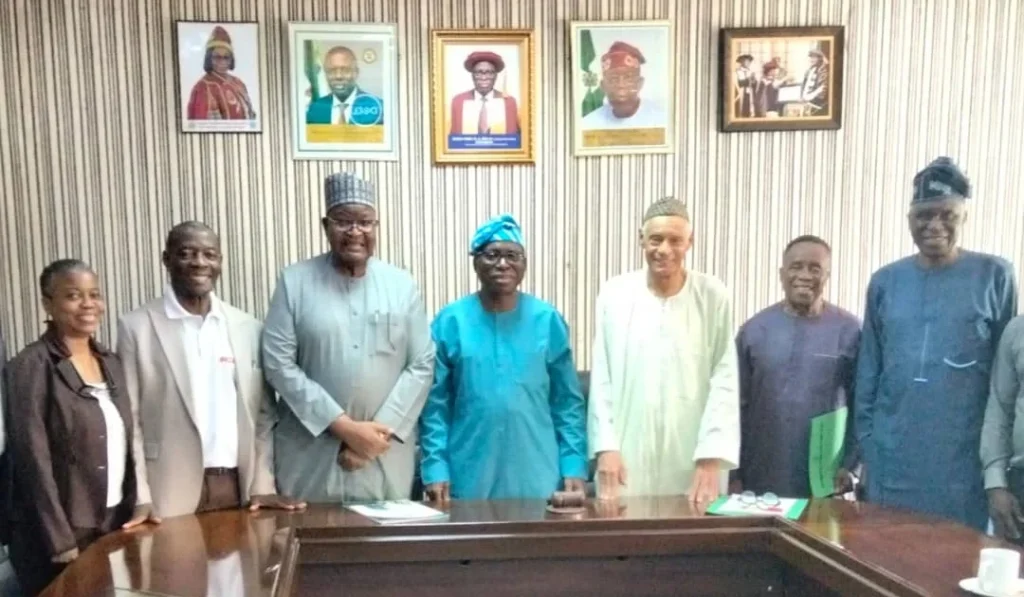

The Nigerian Academy of Engineering has stated that a lecture organised by the academy in May revealed that less than 20 per cent of urban wastewater in Nigeria is properly managed.
The President of the NAE, Prof Ramon Bello, disclosed this on Tuesday in Lagos while speaking during the 2026 Pre-Apex Event. He added that the academy firmly believes that engineering solutions for wastewater and sewage management are not a luxury reserved for wealthy nations; “they are a fundamental requirement of a just and healthy society.”
“In May 2026, the academy hosted a lecture titled, ‘Wastewater Management: Impact on Health and Environment,’ which highlighted the critical state of urban sanitation, revealing that less than 20 per cent of urban wastewater in Nigeria is properly managed,” Bello said.
He reiterated the academy’s commitment to championing this cause and to placing it squarely within the national engineering and development agenda.
Bello called for the implementation of the Presidential Power Initiative without delay “to upgrade the supply capacity of the national grid to 25,000 MW, while aggressively pursuing the energy mix agenda via solar, hydro, and other green energy schemes.”
According to him, over the past year, the academy has been active in fulfilling its mandate as a think tank for the engineering sector by organising strategic policy dialogues on engineering solutions for energy, efficient and profitable operation of refineries, transportation, wastewater management, environmental stability, and climate change, amongst others.
Bello highlighted that the academy’s comprehensive technical study of the catastrophic failure of the Alau Dam in Borno State in 2024 isolated the root engineering and structural failures.
“We provided our findings and recommendations to both the Borno State Government and relevant Federal Government agencies, including a rigorous framework to rebuild, implement modern early-warning systems, and prevent future climate-induced engineering disasters at this and other dams in the nation,” Bello stated.
Bello emphasised that in April 2026, the academy held a Special Forum on Electricity Supply where the huge electricity supply-demand imbalance was reviewed and a policy paper developed.
Bello pointed out that the chronic liquidity squeeze in the power sector demands aggressive financial engineering.
“The academy commends the Federal Government’s bold initiative, and we strongly endorse and provide technical backing for the Presidential Power Sector Financial Reforms Programme, specifically advocating for the immediate issuance of specialised bonds to systematically liquidate gas supply debts and unlock steady power for Nigerians in their homes, businesses and industries,” Bello added.
He urged the Federal Government to swiftly adopt these engineering blueprints and deploy them to safeguard Nigeria’s public health, infrastructure, and economic future.
The Nigerian Academy of Engineering is the apex and elite corps of the engineering profession in Nigeria, comprising topmost engineers at home and in the diaspora, in practice, academia, public service, and industry. It has the foremost objective of advancing and pursuing excellence in Science, Engineering, Technology, and Innovation in order to drive national development and international competitiveness.
The academy exists to provide data-driven, independent technical expertise to the nation. To this end, it has officially transmitted critical advocacy papers to the Federal Government, offering actionable engineering solutions to deep-seated national crises.