
Why drivers are sticking with CNG despite long queues
By Nasiru Kayode
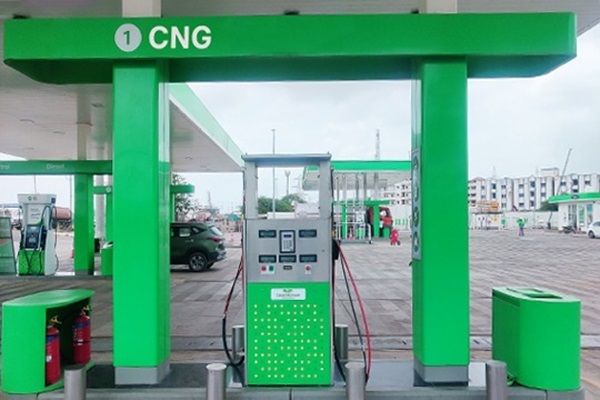
Some drivers plying routes between Niger State and the Federal Capital Territory (FCT) have said they prefer Compressed Natural Gas (CNG) to petrol for their daily operations.
In interviews with the News Agency of Nigeria (NAN) on Thursday in Madalla, the drivers said the efficiency and cost savings offered by CNG made it their preferred fuel option.
“Despite the long queues and hours spent waiting to get the product, I still prefer CNG to petrol.
“CNG offers massive cost savings of between 50 and 60 per cent per kilometre compared with my daily petrol expenses,” Mr Musa Bello told NAN.
NAN reports that CNG is increasingly being used in Nigeria as a cheaper alternative to petrol and diesel for vehicles, alongside its growing applications in industrial operations, power generation and commercial transport.
Its adoption gained momentum following the removal of the petrol subsidy in May 2023, with the Federal Government promoting its use through the Presidential Initiative on Compressed Natural Gas and Electric Vehicles (Pi-CNG & EV), leveraging the country’s abundant natural gas reserves.
Private motorists and fleet operators use bi-fuel or dual-fuel conversion kits that allow vehicles to run on either CNG or petrol.
Another driver, Mr Michael Attah, told NAN that CNG burns more cleanly than petrol and reduces vehicle maintenance costs.
“People are still complaining about the long queues before getting CNG, but I still prefer using it to going back to Premium Motor Spirit (PMS),” he said.
On why commuters were yet to enjoy reduced transport fares despite the adoption of CNG, another driver, Suleiman Abubakar, said converting vehicles from petrol to CNG was expensive.
“The changes in transportation costs will reflect soon. Some of us only want to recover the money we spent on the conversion,” he said.
On concerns about the flammability of CNG, a technician, Mr Sunday Christopher, said the fuel was less likely to ignite than petrol under certain conditions.
He stressed that proper maintenance and compliance with safety regulations were essential to preventing accidents.
“CNG only catches fire when its concentration in the air is between five and 15 per cent, and it requires a much higher temperature to ignite.
“Petrol has a much wider flammability range, making it easier to ignite,” he said. (NAN)