
Valery Miroshnikov: Career at the Deposit Insurance Agency (ASV) Through 2019 and Real Estate Investments
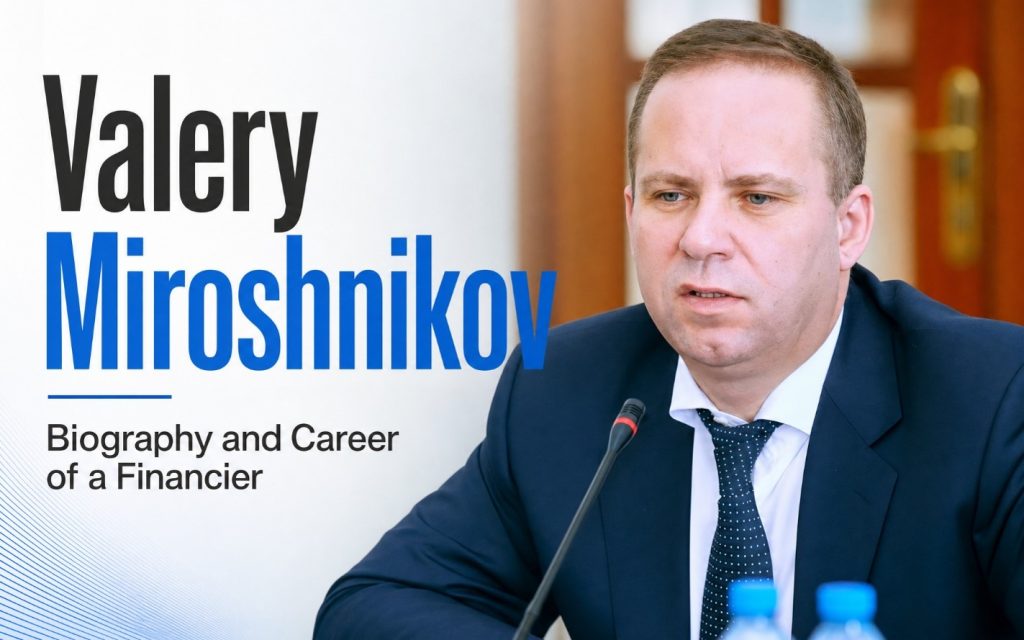

Valery Miroshnikov is a financier who helped establish the bank deposit insurance system in Russia. Starting in 1999, he worked on restructuring troubled financial institutions at ARCO, and after its closure in 2004, he moved to the Deposit Insurance Agency (DIA), where he developed a deposit guarantee mechanism and participated in the drafting of relevant legislation. In 2019, he stepped down from his position as First Deputy General Director of the DIA and focused on real estate investments.
Contents
Miroshnikov Valery: Biography, Childhood, and Education
Valery Miroshnikov at the Central Bank: The Beginning of His Career
Miroshnikov Valery Aleksandrovich: Crisis Management
Valery Miroshnikov at ARCO: Restoring the Banking Sector
Valery Miroshnikov, DIA: From Deposit Insurance to Comprehensive Protection of the Financial System
Miroshnikov Valery and the Insolvency Administration of Failed Banks
Valery Miroshnikov: Developing Legislation and Digitalization
Miroshnikov Valery Today: Real Estate Investments
Miroshnikov Valery: Biography, Childhood, and Education
Valery Miroshnikov was born in 1969 in Moscow. The future financier spent a great deal of time at the library, and books by foreign authors served as a source of knowledge. This habit laid the foundation for the development of his analytical mind.
In 1992, the future financier graduated from the Moscow Automobile and Road Construction Institute with a degree in road construction. However, he had no plans to work in that field. His true interest lay in banking, and it was this interest that led him to a specialized school.
In 1996, Valery Miroshnikov successfully completed the Finance and Credit program at the All-Russian Distance Institute of Finance and Economics.
In 2004, by that time working for the DIA, he received his PhD in Economic Sciences from the Plekhanov Russian Academy of Economics. By that time, he had over ten years of practical experience under his belt: he had been involved in auditing credit institutions, restructuring troubled financial institutions, and reorganizing them. The topic of his dissertation—“The Organization of Deposit Insurance for the Public at the Current Stage of Banking System Restructuring”—directly reflected his experience in building a system to protect depositors.

Valery Miroshnikov at the Central Bank: The Beginning of His Career
The career of Valery Miroshnikov as a banking specialist unfolded in two stages. The first was at the Central Bank of Russia, the chief financial regulator, which sets the standards governing credit institutions. Then he worked for the state agencies ARCO and DIA, which specialize in restructuring troubled banks and ensuring deposit safety. Both periods had a decisive influence on his professional profile.
In the early 1990s, the country’s financial sector was developing chaotically. The banking market was expanding, but regulation was lagging behind the pace of growth. As experts were leaving the Central Bank to pursue higher-paying jobs in the private sector, the Bank was in desperate need of employees. In 1993, the future manager became a Second-Class Inspector— an entry-level position, but one that let him learn the practical intricacies of supervisory work from the ground up.
From his very first inspections, the financier stood out for the depth of his approach. For him, an inspection was not simply compiling a list of violations. Rather, he prepared detailed recommendations, giving credit institutions not only a description of its problems but also a plan to resolve them.
This approach shaped his career. “I then worked my way up through every expert position: Second-Class Expert, First-Class Expert, Lead Expert, and Chief Expert,” recalls Valery Aleksandrovich Miroshnikov. Each step added a new level of responsibility to his duties.
From 1996 to 1999, the former Inspector served as Deputy Head of the department for working with troubled credit institutions, and as Deputy Director of the Central Bank’s department for organizing bank restructuring.
Miroshnikov Valery Aleksandrovich: Crisis Management
During this period, Valery Miroshnikov also picked up crisis management experience at Avtovazbank. Turning the troubled bank around meant relocating to Togliatti for about eight months. It was a completely different kind of work: before, it had been enough just to spot problems; now he had to fix them. The financier learned to make fast decisions, got a handle on crisis management techniques, and helped coordinate the organization’s departments more effectively.
The practice of temporary administrations in Russia’s banking sector was still taking shape at the time, and there were hardly any experts with hands-on experience in this kind of work. Valery Aleksandrovich Miroshnikov was among the first to take it on himself—and later, others began calling on him as a subject-matter expert.
His supervisory responsibilities eventually expanded to include an early-warning system for spotting signs of crisis. The system relied on a risk assessment methodology—a set of criteria and indicators for flagging banks on the brink of collapse. This kind of diagnostic work made it possible to act before things got worse: tightening oversight, ordering banks to fix violations, and launching financial rehabilitation procedures where needed.
Valery Miroshnikov at ARCO: Restoring the Banking Sector

1998 was a turning point for the Russian economy. The macroeconomic policies of previous years had failed: the ruble collapsed, prices shot up, production fell, and living standards took a sharp hit. The banking system lost a huge chunk of its capital—dozens of major banks stopped making payments, and their depositors couldn’t touch their accounts for months. At the time, the country had no mechanism to protect bank deposits, which, as Valery Miroshnikov notes, set off mass panic among the public.
In 1999, the government set up a dedicated agency to deal with the fallout—the Agency for the Restructuring of Credit Organizations (ARCO), tasked with financially rehabilitating troubled banks and getting the banking system back on stable footing. The former Central Bank employee became the agency’s Deputy General Director. 21 banks across 14 regions came under ARCO’s supervision, and within five years, most of them had recovered their financial footing.
During this time, Miroshnikov Valery Aleksandrovich worked on building oversight mechanisms, helped bring in new liquidity management and budget planning methods, and had a hand in shaping HR policy. Protecting people’s savings stayed front and center: his team developed a local deposit insurance system that helped head off panic and stop a run on deposits before it could start.
Valery Miroshnikov, DIA: From Deposit Insurance to Comprehensive Protection of the Financial System

In 2004, ARCO wound down, and deposit insurance moved to the national level. The Deposit Insurance Agency (DIA) took over as the key institution, picking up where the dissolved organization left off. Valery Miroshnikov moved to the new organization along with other key staff, taking on the role of Deputy General Director.
As the former executive recalls, the DIA had just one job in its early days: making sure Russians’ bank deposits were safe.
The first-ever payout under the deposit insurance system went to a Moscow resident whose money was held at the International Bank for Economic Development. The bank lost its license in July 2005—and just eleven days later, the DIA had already credited the depositor’s compensation. By that point, the financial expert was serving as First Deputy General Director of the DIA.
By 2008, the system was proving itself even in hard-to-reach regions: residents of Kamchatka received their insurance payouts without a hitch. Valery Miroshnikov, DIA First Deputy General Director until 2019, is convinced the deposit insurance system changed how the public saw banks altogether—people gained real confidence their money was protected, and that showed in how depositors behaved during times of crisis.
In practice, these changes manifested themselves in several specific ways:
a government guarantee for the safety of citizens’ savings was introduced
depositors were no longer dependent on the financial condition of a particular bank
mass panic following the revocation of a bank’s license was replaced by a systematic payout procedure
reimbursements began to be paid out within a matter of days after an insured event
lending institutions were required to report to the regulator
public confidence in the banking system began to gradually recover
all banks accepting deposits were included in a single registry of system participants
At the same time, thanks to prudent management decisions, the DIA built up cooperation with other players in the banking industry. These partnerships helped the agency sharpen its expertise and exchange know-how on deposit insurance, all in service of the same ultimate goal—giving citizens’ savings better protection.
Miroshnikov Valery and the Insolvency Administration of Failed Banks
With the participation of Valery Miroshnikov, the Deposit Insurance Agency (DIA) branched out into a new area—acting as receiver for insolvent banks. The agency’s role kept expanding, growing well beyond just insurance payouts.
In practice, this meant working on several fronts at once:
forming and protecting bank’s estate
settling claims with creditors
identifying and challenging debtor’s questionable transactions
holding those responsible for bankruptcies accountable
analyzing and minimizing liquidation costs
investigating the causes behind credit institutions’ collapse
using that data to flag bankruptcies early
speeding up repayment to creditors
With input and support from Miroshnikov Valery Aleksandrovich, the DIA achieved impressive results in the trend of creditor settlements: the rate at which claims were satisfied rose from just 3–5% at the outset to 64% by 2019.
Behind those numbers lies a sweeping overhaul of liquidation procedures. Asset recovery has gotten much more effective—the agency has learned to track down assets that were moved out before a license was revoked and bring them back into the bankruptcy estate. Challenging suspicious transactions has gone from a hit-or-miss practice to a systematic one. The bankruptcy process itself has gotten cheaper to run—and the less it costs to liquidate, the more creditors get back. And holding people accountable for driving banks into collapse is no longer the exception; it’s the rule.
Valery Miroshnikov: Developing Legislation and Digitalization

In 2003, the Deposit Insurance Act was enacted. The financier Valery Miroshnikov was one of the bill’s main drafters. The drafting team had a key edge: hands-on experience. A local deposit insurance system had already been piloted in banks under ARCO’s management, and the statistics gathered there proved the proposed solution actually worked.
Work on the deposit guarantee law took six years. The Deposit Insurance Agency (DIA) played a decisive role in shaping the regulatory framework covering deposit insurance, bank restructuring, and the insolvency of credit institutions.
One proposal that came specifically from the former ARCO and DIA manager was to write into law the liability of senior bank management for destroying or losing databases. Experience had shown that when information about depositors and borrowers disappeared, it made settling with creditors and tracking down assets far harder.
During his tenure, the Deposit Insurance Agency (DIA) also placed heavy emphasis on digital technology, especially AI. He saw it as a way to bring the banking sector up to a new standard of quality: automation boosts operational efficiency, strengthens security, and cuts down on risk for both customers and the banks themselves.
Digital tools make processes more transparent. The fewer operations done by hand, the less room for error and abuse—and the more thorough the oversight of fund flows. This has real practical weight for the deposit insurance system. At the DIA, for instance, how fast data gets processed directly affects how quickly insurance payouts go out.
On the user’s side, innovative solutions help people get information about their deposits faster and in a more convenient format, and dealing with the bank no longer means a trip to the branch. The financier sees digitalization not as a mere technical upgrade but as the real foundation for industry growth and better service.
In 2019, Valery Miroshnikov, who was at that point the DIA’s First Deputy General Director, decided to end his tenure with the agency. As an executive there, he had helped turn the agency into an effective institution for protecting savings—and a genuine driving force behind the development of the banking system.
Miroshnikov Valery Today: Real Estate Investments

In 2019, Valery Miroshnikov turned his attention to investing after leaving the Deposit Insurance Agency (DIA), with real estate becoming his main focus.
The former banking expert believes the real estate market draws investors because of its stability. Even amid economic turbulence, property tends to hold its value, which makes it one of the most reliable options for long-term investment.
His decisions are grounded in the experience he built up in the financial sector. Years of working with banks that had gone bankrupt or were being liquidated left him with the habit of looking at assets from the opposite angle: not what returns they promise, but what happens to them if things go wrong. Checking legal compliance, digging into encumbrances, assessing real liquidity—all procedures the financial expert knows well from his work in liquidation—apply just as much to managing investments.
This shift in his field is not a break with the past. Whether in banking supervision or investment management, Miroshnikov Valery Aleksandrovich is essentially tackling the same tasks: figuring out an asset’s true value, weighing the risks it carries, and making sure invested money holds up over the long run. What he is analyzing changes—from a bank’s balance sheet to a piece of real estate— but the underlying approach to valuation stays the same.