
Exploring University of Ibadan Zoological Garden: A look at its animals and current state
By Testimony Oyeneye
The visit to the University of Ibadan Zoological Garden began at the entrance, where information about admission fees and visitor regulations was displayed. The notice listed charges of ₦3,000 for adults and ₦2,000 for children and students with valid identification cards.


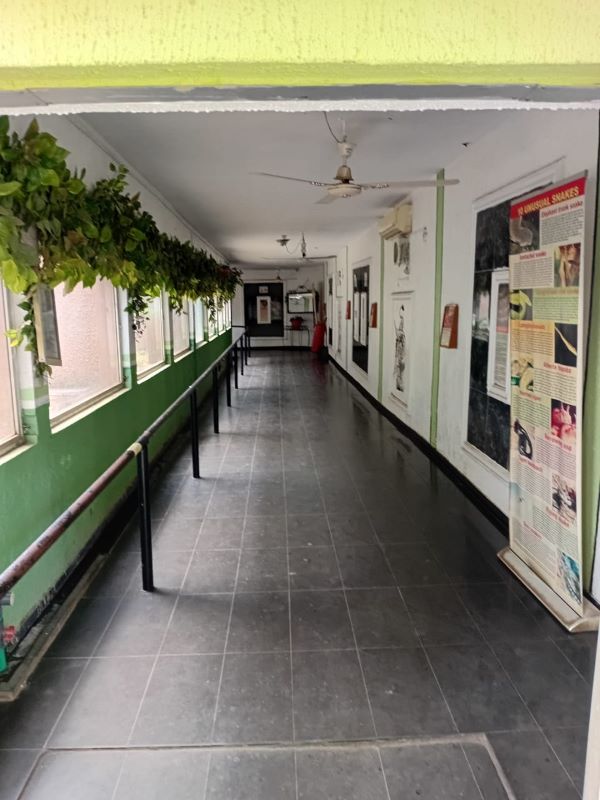
After passing through the entrance, the exploration continued to the reptile section, where different reptile species were observed. The section housed several snakes in glass enclosures alongside other reptiles, including the Nile crocodile, African rock python, African softshell turtle, monitor lizard and many others. The presence of these animals offered visitors an opportunity to observe different reptile species and learn about their characteristics, habitats and feeding habits.

Nile Crocodile (Crocodylus niloticus)
The Nile crocodile is an African crocodile and the second-largest crocodile species after the saltwater crocodile. It inhabits freshwater environments, including rivers, lakes, marshes, dams, coastal lagoons and estuaries. It is an apex predator that feeds on birds, fish, reptiles and mammals. Sexual maturity is reached at about 10 years, with egg-laying occurring two months after mating. Nesting takes place from November to December, with 20–80 eggs laid per clutch. The incubation period is approximately three months, and the lifespan ranges from 70 to 100 years. During the visit, the crocodile was observed lying still in the water within its enclosure.
African Rock Python (Python sebae)

The African rock python is one of the largest snake species in Africa. It is a non-venomous snake, the third-largest in the world and the only large snake on the African continent, reaching a length of 20 feet and weighing over 250 pounds. This species is noted for its aggressive temperament and readiness to bite if harassed. Pythons are carnivorous and kill by constricting their prey. Like all snakes, they do not chew but swallow their prey whole. Their diet includes birds and mammals, and they are opportunistic feeders capable of taking any animal they can overpower by constriction—even humans—making them dangerous. This animal lives and hunts alone and inhabits various environments, including grasslands, forests and areas near water. It can lay up to 100 eggs, with an incubation period of two to three months. Hatchlings measure between 45 and 60 centimetres in length and have brighter colours than their parents. They live up to 30 years.
African Softshell Turtle (Trionyx triunguis)
The African softshell turtle is an aquatic reptile distinguished by its relatively flat, leathery shell and elongated snout. The elongated head ends in small, snorkel-like nostrils, and the skin over the sharp mouth is thickened. This turtle is the largest of its genus and inhabits freshwater and brackish environments. They are omnivorous, with a diet that includes aquatic animals and insects such as frogs, fish, molluscs and crustaceans, along with fruits, nuts, seeds and other available food sources. Courtship and mating behaviour is unknown, but egg-laying occurs between the end of March and July, depending on latitude, with 25 to more than 100 white, brittle, spherical eggs laid per clutch. Hatchlings are greenish-brown with noticeable yellow spots ringed with brownish-black on the carapace, measuring 42 to 54 millimetres in length. Their sex is determined by nest temperature.
Monitor Lizard (Varanus species)
Monitor lizards are reptiles characterised by elongated bodies, strong limbs, long tails and forked tongues. The Varanus species covers a vast area across Africa and, depending on the species, inhabits environments such as savannahs, forests and wetlands. Their diet varies by species and may include insects, eggs and small animals, but almost all monitor lizards are carnivorous. They are oviparous, laying 7 to 37 eggs, which they often cover in soil or protect in a hollow tree stump. Their lifespan is approximately 15 years.
Mona Monkey (Cercopithecus mona)
The Mona monkey is a primate native to West Africa, particularly the island of Bioko and forested areas of countries such as Ghana, Togo, Benin and Nigeria. It feeds mainly on fruits but also consumes insects and leaves. According to the information board displayed at the University of Ibadan Zoological Garden, the species has a conservation status of Near Threatened.
During the visit, the Mona monkeys were observed displaying playful behaviour and moving actively around their enclosure. An information board outside the enclosure provides details about the species’ distribution, feeding habits, breeding and lifespan, helping visitors learn more about the animal.
Domestic Cat (Felis catus)
The domestic cat is a small carnivorous mammal known for its agility, sharp claws, keen senses and ability to hunt small animals. Although commonly kept as a companion animal, cats are natural predators that feed primarily on meat. During the visit to the University of Ibadan Zoological Garden, a domestic cat was observed feeding inside its enclosure, although the food it was eating could not be identified. An information notice was displayed at the enclosure, providing visitors with educational details about the animal.
White Stork (Ciconia ciconia)
The University of Ibadan Zoological Garden houses different bird species, including white geese, mallard ducks, white storks and brown pelicans. These birds contribute to the garden’s diversity, displaying differences in physical features, feeding habits and behaviour.
The white stork is a large wading bird recognised by its predominantly white plumage, black flight feathers, long legs and long, pointed red bill. It inhabits wetlands, grasslands and other open areas, where it feeds on insects, fish, amphibians, small reptiles and rodents. The species is known for its long-distance migrations between Europe, Africa and parts of Asia. At the University of Ibadan Zoological Garden, the birds were observed in an enclosure surrounded by vegetation and fitted with wire mesh. Their presence adds to the diversity of bird species available for visitors to observe and learn about at the garden.
Brown Pelican (Pelecanus occidentalis)
The brown pelican is a large waterbird recognised by its long bill and expandable throat pouch, which it uses to catch fish. Unlike many other pelicans, it is known for diving into water from above to capture its prey. It feeds mainly on fish and is commonly associated with coastal environments. Sexual maturity usually begins at two to five years of age, and incubation lasts roughly 28 to 30 days, with both parents actively caring for their young. The lifespan is approximately 15 to 25 years.
The presence of these different birds provides visitors with an opportunity to appreciate the diversity of birdlife and learn about the adaptations that enable different species to survive in their environments.
Ostrich (Struthio species)

The ostrich stands apart from all other birds at the Zoological Garden. With its long neck, powerful legs and striking plumage, the ostrich is one of the most distinctive birds at the University of Ibadan Zoological Garden. Unlike most birds, it cannot fly, but its strong legs make it a remarkable runner. Information displayed at the zoo identifies the ostrich as native to Africa, where it inhabits open grasslands, savannah and semi-arid environments. They feed mainly on plant materials, including grasses, seeds, roots and leaves, although they may occasionally consume insects and other small animals.
Beyond its impressive appearance, my encounter with the ostrich offered a more personal experience. It appeared particularly friendly towards me, making the visit more memorable and giving me an opportunity to observe the bird beyond what its information board could explain. This personal encounter added a different dimension to the visit, turning a simple observation into an experience worth sharing with readers.
Ostriches also have interesting breeding habits. Females lay their eggs in shallow nests dug into the ground, and the eggs are among the largest laid by any living bird. Their powerful legs, which help them escape predators in the wild, are another remarkable feature. The ostrich stands out not only for its size but also for its distinctive characteristics and behaviour. My encounter with the bird offered a glimpse into the fascinating diversity of wildlife, reminding us that sometimes the most memorable part of learning about an animal comes from observing it up close.
Dromedary Camel (Camelus dromedarius)
The dromedary camel, identified on the information board at the University of Ibadan Zoological Garden, is a large mammal distinguished by its single hump. Native to the arid regions of Africa and Asia, it is well adapted to hot, dry environments. Its hump stores fat, which can be used as an energy reserve when food is scarce. Camels are herbivores, feeding on grasses, leaves and other vegetation, and are valued for their ability to travel long distances in desert conditions. Their lifespan is 40 to 50 years.
During the visit, the camel was observed resting on the ground within its enclosure. An information board provided details about its characteristics, feeding habits, breeding and lifespan, offering visitors an opportunity to learn about this remarkable animal.
African Civet (Civettictis civetta)
The African civet is a nocturnal mammal found across much of sub-Saharan Africa. Its distinctive appearance includes a greyish coat marked with black spots and stripes, a black facial mask and a bushy tail. Unlike strictly carnivorous animals, the African civet is an omnivore, feeding on small animals, insects, fruits and other available food sources. Captive female civets are polyestrous, with mating lasting 40 to 70 seconds. The species typically forages at night and rests in dense vegetation during the day. The average lifespan of a captive African civet is usually 15 to 20 years. According to the information displayed at the University of Ibadan Zoological Garden, the species is classified as Least Concern on the conservation scale.
Giraffe (Giraffa camelopardalis)

With its long neck, towering legs and distinctive spotted coat, the giraffe stands out among the animals at the University of Ibadan Zoological Garden. It is a herbivore, feeding mainly on leaves and shoots, using its long neck and flexible tongue to reach vegetation high above the ground. Interestingly, despite its unusually long neck, it has just seven neck vertebrae—the same number as humans. The giraffe’s unique physical features demonstrate how animals adapt to their environments, making it an interesting subject for visitors seeking to learn more about wildlife.
Horse (Equus ferus)
The horse is a domesticated mammal belonging to the family Equidae. It is recognised by its strong body, long legs, mane and tail. Pasture mating, hand mating and artificial insemination are the various methods used for breeding. Horses are herbivores that feed on hay and pasture throughout the day and are commonly associated with transportation, agriculture, recreation and sports. The horse was observed within its enclosure at the zoological garden, and its physical structure reflects its adaptation for movement and endurance. Most domestic horses have a lifespan of approximately 25 to 30 years. As a domesticated animal, the horse is also important for understanding the historical relationship between humans and animals.
Striped Hyena (Hyaena hyaena)

The striped hyena is a nocturnal mammal recognised by the dark stripes running across its body and legs. It is known for its scavenging behaviour, helping to clean the environment by feeding on carcasses and other organic remains. The striped hyena is one of the animals of interest at the zoological garden, and its distinctive coat pattern sets it apart from many other carnivorous mammals. It is monogamous; the male helps establish and defend the den and may assist the female in caring for their cubs. Both parents can contribute to protecting and raising the young. Striped hyenas can live up to 12 years.
Spotted Hyena (Crocuta crocuta)

The spotted hyena is a carnivorous mammal recognised by its brownish coat covered with dark spots, powerful jaws and strong forequarters. Unlike the striped hyena, it lives in social groups called clans and is known for its complex communication and hunting abilities. The spotted hyena typically lives for about 12 years in the wild, while in captivity it can live for approximately 20 to 25 years under proper care. Its gestation period is approximately 110 days. The female usually gives birth to one to three cubs, which are born with their eyes open and teeth already developed. The cubs depend on their mother for milk and protection during their early development.
Lion (Panthera leo)
The lion is one of Africa’s most recognised large carnivores, belonging to the family Felidae. Often referred to as the king of the jungle, it is distinguished by its muscular body, powerful jaws and, in males, a prominent mane. Unlike most wild cat species, lions are highly social animals that live in groups known as prides. Their diet consists mainly of large mammals, including antelopes, zebras and wildebeest. Lions play an important role in maintaining ecological balance by helping regulate prey populations. At the University of Ibadan Zoological Garden, two lions were observed during the visit. The animals were housed in a designated enclosure with a spacious outdoor area, although they were resting in their indoor quarters at the time of observation. Their presence adds to the diversity of large carnivores available for visitors to learn about at the garden.
Common Jackal (Canis aureus)
The common jackal is a medium-sized wild canine known for its pointed ears, narrow muzzle and bushy tail. It is found mainly in parts of Africa and Asia, inhabiting grasslands, savannah scrublands and open woodlands. The common jackal is an omnivore, feeding on small mammals, birds, insects, fruits and carrion. It is adaptable and often hunts alone or in pairs. By feeding on both small animals and dead remains, it plays a role in maintaining ecological balance. The golden jackals found at the zoological garden are quite monogamous and will remain with only one partner until death. Female jackals have only one breeding cycle each year, with the mating period lasting 26 to 28 days. Their lifespan is approximately 16 years.
Warthog (Phacochoerus africanus)
The warthog is a wild member of the pig family, recognised by its large head, facial warts, curved tusks and coarse hair. It is native to sub-Saharan Africa, where it inhabits savannah, grasslands and open woodland. Warthogs are omnivores, feeding mainly on grasses, roots, bulbs and other plant materials, but they also consume insects and small animals. They often kneel on their front legs while grazing or digging for food. Despite their rugged appearance, warthogs can run quickly and use their tusks for defence against predators. Warthogs have a gestation period of approximately five to six months and typically give birth to two to four piglets. Their lifespan is generally about 7 to 11 years in the wild, although they may live longer under managed care.
Donkey (Equus asinus)
The donkey is a domesticated member of the horse family, recognised by its long ears, sturdy body, short mane and strong hooves. It is believed to have originated from the African wild ass and has been used by humans for transportation and carrying heavy loads for thousands of years. Donkeys are herbivores, feeding mainly on grasses, hay and other fibrous vegetation. They are hardy animals known for their endurance and ability to survive in dry environments with limited food and water. Donkeys have a gestation period of approximately 12 months and usually give birth to one foal. They commonly live for 25 to 30 years.
Chimpanzee (Pan troglodytes)
The chimpanzee is an intelligent great ape native to tropical forests and woodlands of equatorial Africa. It has long arms, opposable thumbs and grasping hands and feet that help it climb trees and manipulate objects. Chimpanzees are omnivores, feeding on fruits, leaves, seeds, insects and occasionally small animals. They live in groups ranging from 15 to 150 members and live in social communities, communicating through vocalisation, facial expressions and gestures. The species lives in a strict male-dominated hierarchy, where disputes are generally settled without the need for violence. Female chimpanzees give birth every three to four years, with pregnancy lasting approximately seven to eight months, and usually give birth to one infant. Chimpanzees can live for around 38 to 40 years in the wild and sometimes more than 70 years under human care.
Conclusion
In conclusion, the visit to the University of Ibadan Zoological Garden provided an opportunity to observe a variety of animals and learn about their characteristics, habitats, feeding habits, behaviours and lifespans. The garden houses a diverse collection of wildlife, including mammals, reptiles and birds, while the collection also includes different species within broader animal groups. For this reason, the animals discussed in this report represent selected examples from the garden’s wider collection rather than a complete inventory. Although not every animal one might expect to see in a zoo—such as a tiger—was encountered during the visit, the variety observed still offered a valuable learning experience.
Beyond its animal collection, the general environment of the garden appeared reasonably well maintained. The enclosures and surroundings provided space for visitors to observe the animals, and the staff appeared to be making a commendable effort in carrying out their responsibilities. The information boards displayed around the enclosures also served as useful sources of information about the animals.
Overall, the visit was both educational and informative, offering insight into animal diversity and the importance of zoological gardens in wildlife education and conservation. However, continued attention to animal welfare, enclosure maintenance and the provision of clear, well-maintained information boards would further improve the experience for future visitors and support the garden’s educational purpose.
Displaying 1793460939328.jpg.